Sheet Metal Prototyping Services: The 2026 Guide to Rapid Industrial Innovation
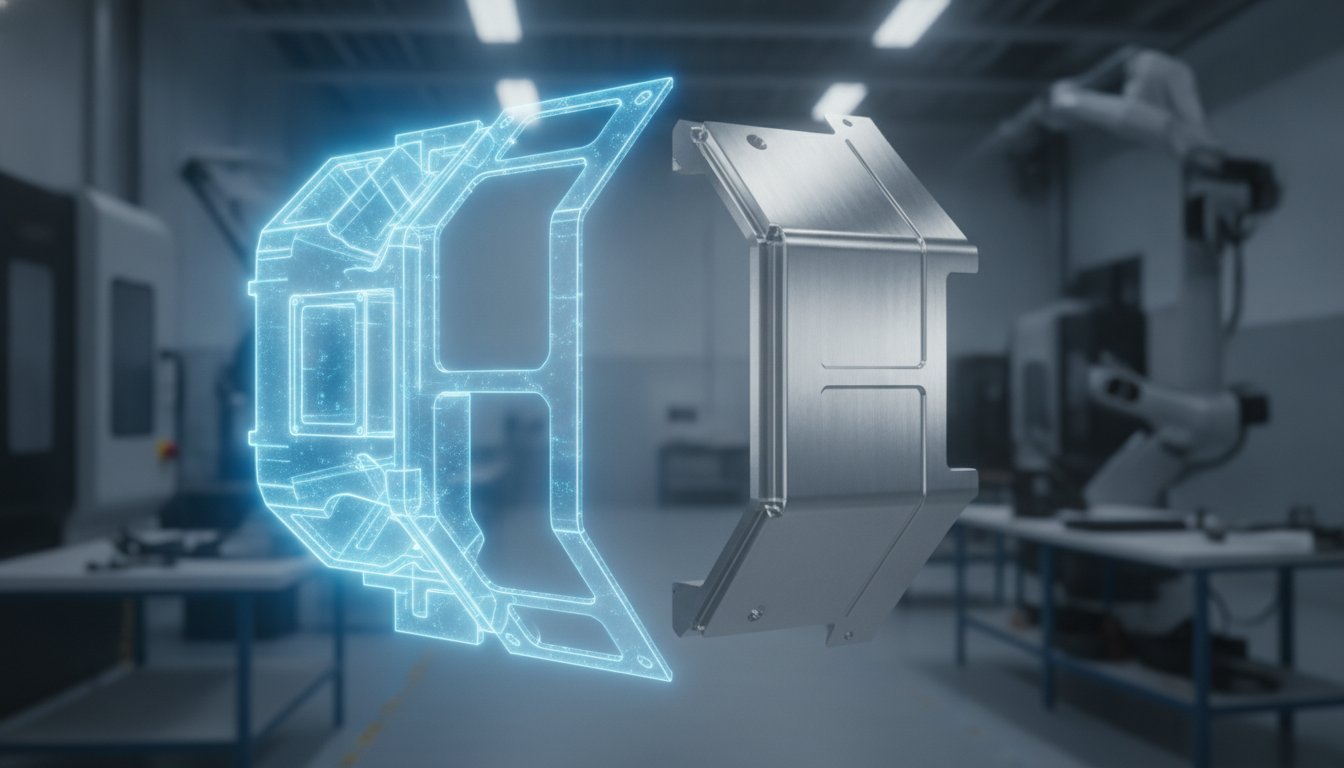
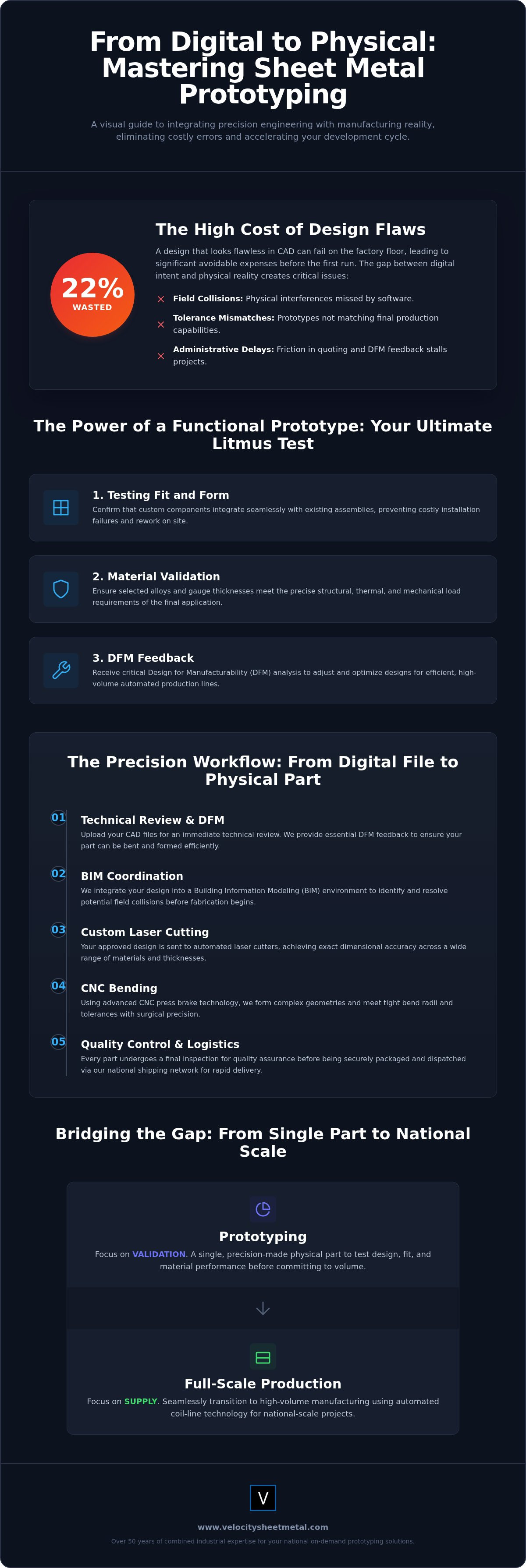
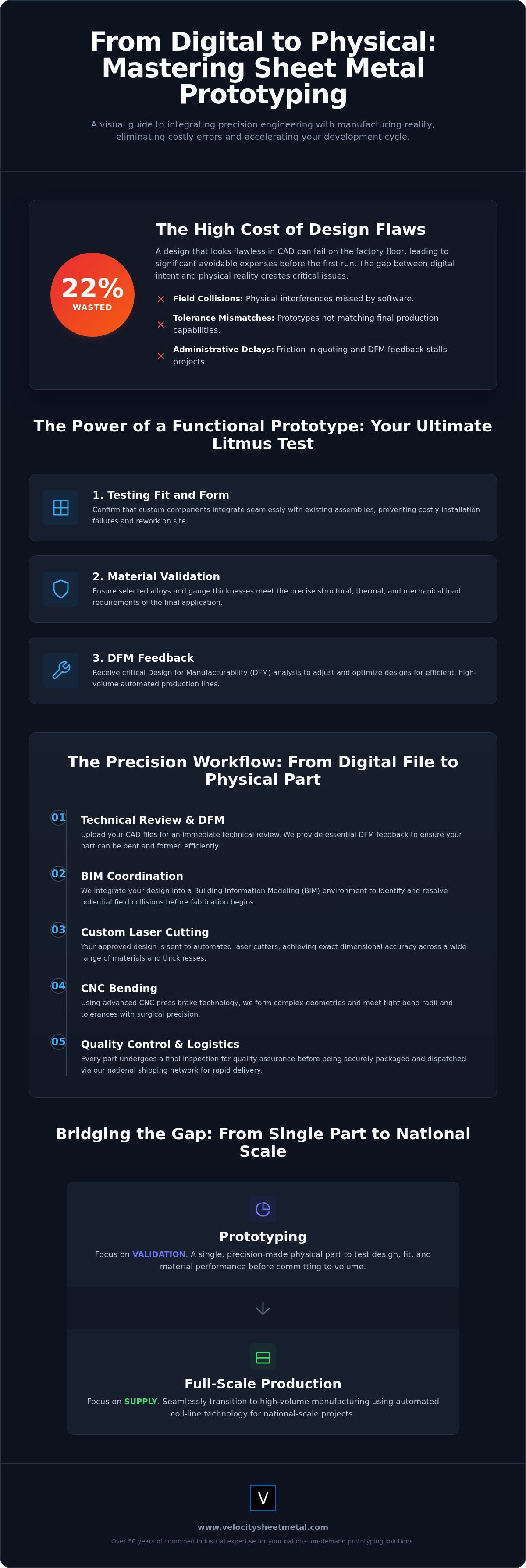
A design that looks flawless in a CAD environment can still fail catastrophically on the factory floor, costing your operation up to 22% in avoidable production expenses before the first run even begins. You’ve likely dealt with the frustration of administrative delays in quoting or prototypes that simply don't match the tolerances of your final production line. These gaps between digital intent and physical reality create field collisions that stall projects and drain budgets. Selecting the right sheet metal prototyping services is no longer just about getting a sample; it's about validating your entire manufacturing workflow.
We understand that in 2026, speed and industrial pragmatism are your highest priorities. You need a functional part that matches your CAD specs exactly, providing a clear path to national-scale manufacturing. This guide masters the transition from digital files to precision physical parts. We'll explore how to integrate BIM coordination with automated fabrication, navigate current material cost fluctuations, and reduce the risk of design failure. From laser cutting to CNC bending, you'll learn how to turn a digital concept into a tangible, production-ready asset with surgical precision.
Key Takeaways
- Accelerate your development cycle by using functional prototypes to validate designs and significantly reduce time-to-market for complex OEM components.
- Eliminate field collisions and administrative delays through a digital-to-physical workflow that integrates BIM coordination with precision laser cutting.
- Understand how material selection, gauge thickness, and specific bending radii impact the accuracy and viability of your sheet metal prototyping services.
- Establish a seamless transition from a single physical part to high-volume manufacturing using automated coil-line technology for national-scale projects.
- Bridge the gap between digital CAD files and tangible results with a partner offering nationwide shipping and over 50 years of combined industrial expertise.
Accelerating Development with Sheet Metal Prototyping Services
Industrial innovation depends on the speed of the feedback loop. For Original Equipment Manufacturers (OEMs), the bridge between a CAD file and a functional part is often where projects stall or succeed. High-quality sheet metal prototyping services provide the necessary physical validation to ensure that a design can withstand real-world mechanical stress. We don't deal in fluff or aesthetic models that can't be manufactured. We focus on industrial pragmatism. Our goal is to move you from a digital concept to a physical part with zero administrative friction.
The Purpose of a Functional Prototype
A prototype serves as the ultimate litmus test for fit, form, and function. In the HVAC sector, a design that looks perfect on a screen might fail during installation due to unexpected material behavior or tight tolerances. Prototyping allows engineers to test material performance under specific thermal and mechanical loads; it identifies interference issues that BIM software might miss. This phase ensures design manufacturability (DFM) before the high-volume equipment starts running. Catching a tolerance issue now prevents thousands of dollars in waste later.
- Testing Fit and Form: Confirming that custom components integrate seamlessly with existing assemblies.
- Material Validation: Ensuring selected alloys meet the structural requirements of the project.
- DFM Feedback: Adjusting designs to optimize for automated production lines.
Prototyping vs. Short-Run Production
There's a critical distinction between a one-off prototype and on-demand production. Prototyping focuses on validation, while short-run production focuses on immediate supply. When your design is finalized, the path to scaling should be seamless. Moving from a single custom transition fitting to coil line duct fabrication requires a partner who understands both ends of the manufacturing spectrum.
By utilizing professional sheet metal prototyping services, you eliminate the guesswork from the scaling process. We bridge this gap by providing a technical review for a single prototype while maintaining the capacity for national-scale manufacturing. Whether you're testing a new curb adapter or a complex server rack enclosure, the transition must be methodical. We use automated technology to ensure that the precision of your prototype is mirrored in every part of a 1,000-unit production run. This approach reduces the risk of design failure and gets your product to market faster.
The Digital-to-Physical Workflow: BIM and Laser Precision
Transitioning from a digital concept to a physical part requires more than just a machine; it requires a methodical pipeline that eliminates human error. Many sheet metal prototyping services treat the process as a simple "cut and ship" transaction. We treat it as an engineering sequence. By integrating digital modeling with automated hardware, we ensure that the prototype you receive is an exact representation of the final production unit. This workflow is designed for speed, moving your project through five critical stages with surgical precision.
- Step 1: Technical Review. You upload your CAD files. We perform a technical review to provide immediate Design for Manufacturability (DFM) feedback, ensuring your part can actually be bent and formed efficiently.
- Step 2: BIM Coordination. We integrate your design into a larger digital environment to identify potential field collisions before a single piece of metal is touched.
- Step 3: Custom Laser Cutting. Your design is sent to our automated cutters, where we achieve exact dimensional accuracy across various materials.
- Step 4: CNC Bending. Using CNC press brake technology, we meet tight tolerances for complex geometries.
- Step 5: Logistics. Every part undergoes a final inspection for quality control before moving into our national shipping network for rapid delivery.
Integrating BIM Coordination into Prototyping
The biggest gap in modern manufacturing is the disconnect between the design office and the job site. Utilizing BIM for sheet metal fabrication during the prototyping phase allows us to visualize how a part interacts with HVAC systems, plumbing, and structural steel. We use spool drawings to maintain consistency from the first prototype to full-scale production. This digital-first approach reduces scrap and prevents the "field fixes" that often derail large-scale industrial projects. If you're ready to eliminate design uncertainty, our team is ready to provide BIM-coordinated fabrication that fits right the first time.
Precision Laser Cutting: The Prototyping Backbone
Speed is irrelevant if the part doesn't fit. Our custom laser cutting services serve as the foundation of our prototyping workflow, offering the versatility to handle everything from light gauge aluminum to heavy structural steel. We maintain edge quality and dimensional integrity that mechanical shearing simply can't match. Understanding the nuances of Sheet metal forming processes is essential when selecting a prototyping partner. We ensure that every laser-cut edge is clean and every hole is perfectly positioned, allowing for seamless integration into your final assembly. This precision is what allows our prototypes to function as true mechanical validation tools rather than just visual models.
Material Selection and Tolerances for Industrial Prototypes
Precision starts with raw stock selection. Choosing the right alloy for sheet metal prototyping services isn't about aesthetics. It's about structural performance, weldability, and environmental resistance. In most industrial applications, you'll work with galvanized steel for cost-effective corrosion protection, stainless steel for high-heat or sanitary environments, or aluminum for weight-sensitive OEM components. Each material behaves differently under the press brake. You must account for springback and grain direction early in the design phase to avoid rework. A part that functions in 16-gauge mild steel might fail if swapped for aluminum without adjusting the bend radii.
Within the wider Fabricated Metal Products Industry, the transition from digital model to physical part often reveals material limitations. Surface finishes like powder coating or galvanizing add longevity, but they also add thickness. We calculate these variables before the first cut. If your prototype requires a specific surface treatment, the dimensional tolerances must reflect that final coating to ensure proper assembly fitment later in the production cycle.
Steel and Aluminum Bending Capabilities
Bending heavy gauge metal requires more than just raw force. It requires an understanding of minimum bend radii to prevent material fatigue. Aluminum is less ductile than mild steel. It will crack if the radius is too tight. By identifying and avoiding common press brake forming defects like crowning or over-bending during the prototype phase, we ensure that custom brackets and panels maintain their structural integrity. Our CNC press brakes handle everything from light 24-gauge sheets to heavy plate, delivering repeatable accuracy that manual shops can't match.
Specifying Tolerances for HVAC and OEM Parts
In the world of HVAC duct fabrication, "close enough" is a recipe for field failure. While the ISO 2768 medium standard is common for general work, OEM prototypes often require tighter dimensional control. Curb adapters and large-scale mechanical fittings must align perfectly with existing roof openings and equipment bases. We hold tolerances that ensure a seamless fit, reducing the risk of air leakage or structural misalignment. Precision isn't an upgrade; it's the baseline. Whether you're designing a server rack or a complex transition fitting, your prototype must mirror the exact specs of the final production line to be useful for validation.
Transitioning from Prototype to Full-Scale Production
Approval of a prototype is only the first milestone. The real industrial challenge lies in maintaining that precision across thousands of units without inflating lead times. Many sheet metal prototyping services operate as small-scale workshops that struggle when the order volume shifts to a national rollout. We bridge this gap by using automated production lines that mirror the exact tolerances of your validated design. This ensures the transition is seamless and predictable. It moves your project from the lab to the field with industrial speed and professional confidence.
Automated HVAC Solutions at Scale
Scaling custom designs into full-scale HVAC systems requires specialized machinery that eliminates manual variability. For rectangular ductwork, we move from the prototype stage directly into coil line duct fabrication. This automated process handles high-volume requirements while maintaining the structural integrity verified during initial testing. Whether you require complex transition fittings or high-volume spiral and round duct fittings for commercial projects, automation significantly reduces per-unit costs. It allows us to standardize ductwork across multiple job sites, ensuring that every component fits perfectly regardless of the project's scale or location.
OEM Support and National Account Management
OEMs require a partner capable of handling the entire lifecycle of a part. After prototype approval, we provide specialized CNC press brake services for OEMs to deliver standardized industrial components on an on-demand basis. Our national account management team focuses on repeatable accuracy. We don't just ship parts; we manage a complex industrial supply chain. By utilizing automated technology, we drive down costs as volume increases. This is essential for components like server racks, enclosures, or curb adapters where "close enough" results in field failure. We act as your essential bridge between a digital file and a tangible, mass-produced product.
Success at scale depends on logistical reliability. We maintain consistency across every nationwide shipping order by using the digital files and automated workflows established during the prototyping phase. This digital-to-physical thread ensures that the thousandth part is identical to the first. It eliminates the risk of design drift that often plagues manual fabrication shops. If you are ready to move from a validated design to national-scale distribution, contact our automated fabrication facility to secure your industrial supply chain and reduce your risk of design failure.
Velocity Sheet Metal: National On-Demand Prototyping Solutions
Velocity Sheet Metal operates as the essential bridge between digital intent and physical reality. We bring over 50 years of combined management experience to every project, ensuring that our sheet metal prototyping services are grounded in industrial reality rather than marketing hype. We don't just provide parts; we provide a clear path to national-scale manufacturing for contractors and engineers across the US. Our facility is designed to cut through administrative delays, moving your project quickly from a digital file to a tangible product with surgical precision.
Why Choose Velocity for Your Next Project?
We specialize in the complex world of HVAC and heavy-gauge industrial components. While other shops might shy away from the rigors of large-scale mechanical fittings, we embrace them with a "can-do" attitude. Our facility utilizes state-of-the-art precision laser cutting services to maintain exact dimensional accuracy across galvanized steel, stainless steel, and aluminum. We standardize quality for all national accounts, ensuring that a prototype shipped to one job site is identical in quality and tolerance to one shipped across the country. This consistency is the backbone of our national on-demand model.
Get Started: From Digital File to Physical Part
The process is direct and methodical. It starts when you submit your CAD drawings for an expert-assisted review. We don't just quote the job; we analyze the design for manufacturability to identify potential field collisions or forming issues before production begins. Our team acts as a tech-savvy partner, obsessed with detail and delivery. Once the technical review is complete, we move into our streamlined production phase, utilizing automated technology to produce your prototype with speed and accuracy.
From the initial digital input to the final logistics of national delivery, we manage every step of the production line. We understand the urgency of industrial innovation and value your time as much as our own precision. If you're ready to eliminate design uncertainty and secure a reliable partner for your next project, contact Velocity today. We're ready to get to work immediately on your national-scale fabrication solutions.
Securing Your Industrial Supply Chain for 2026 and Beyond
Prototyping is the essential bridge where digital design meets physical reality. By integrating BIM coordination with automated fabrication, you eliminate field collisions and administrative delays before they impact your bottom line. High-quality sheet metal prototyping services provide the validation necessary to move from a single concept to a national rollout with professional confidence. From the first laser cut to final delivery, we handle the technical heavy lifting so you can focus on your next innovation.
Velocity Sheet Metal brings 50+ years of combined industry experience to your project. We operate a BIM-integrated fabrication shop that prioritizes speed, accuracy, and delivery. Our automated technology ensures that every part matches your specifications exactly, reducing the risk of design failure. We manage the entire workflow and provide national shipping to all 50 states, ensuring your components arrive on time and within tolerance. Don't let design uncertainty stall your project. It's time to validate your design and prepare for full-scale production with a partner you can trust.
Request a Precision Prototyping Quote from Velocity Sheet Metal
Frequently Asked Questions
What is the typical lead time for sheet metal prototyping services?
Lead times for sheet metal prototyping services typically range from 2 to 5 days for simple designs using in-stock materials. Complex assemblies or those requiring specialized sourcing for regulated industries may extend this timeline to several weeks. We prioritize speed and industrial pragmatism to ensure you receive functional parts quickly. Our team works to minimize administrative delays by providing rapid technical reviews immediately after you submit your CAD files.
Can you handle prototyping for large-scale HVAC components like curb adapters?
We specialize in large-scale HVAC components including custom curb adapters and high-volume transition fittings. Our facility is equipped with automated technology designed to handle the weight and dimensions of heavy-gauge industrial parts. We ensure that these oversized prototypes match your CAD specifications exactly. This precision prevents costly field collisions during the installation phase of major commercial projects. Our management team applies over 50 years of experience to every large-scale fabrication challenge.
What file formats do you accept for custom laser cutting and BIM coordination?
Our technical review process accepts most standard industrial file formats including DWG, DXF, and STEP files for custom laser cutting. For projects requiring deep integration, we utilize Revit and other BIM-compatible formats to generate precise spool drawings. This ensures a seamless digital-to-physical workflow. By submitting high-quality CAD data, you allow our engineering team to provide immediate feedback on design manufacturability. This methodical approach reduces the risk of errors before the first cut.
Do you offer national shipping for oversized prototypes?
We provide comprehensive national shipping capabilities for all prototypes, including oversized HVAC ductwork and heavy OEM components. Our logistics network is optimized to deliver precision parts to contractors and engineers across all 50 states. We understand that industrial projects operate on tight schedules; therefore, we prioritize secure and timely transport. Whether you are located on the coast or in the midwest, your functional physical parts will arrive ready for immediate validation.
How do you ensure prototype tolerances match final production runs?
We maintain repeatable accuracy by using the same automated machinery for prototypes that we use for full-scale production. Our CNC press brakes and automated coil lines utilize the original digital design files to eliminate manual variability. This digital thread ensures that the thousandth part is identical to the first prototype. By standardizing our quality control processes, we provide national accounts with the reliability needed to scale from a single part to national distribution.
Is BIM coordination included in your prototyping workflow?
BIM coordination is a core component of our prototyping workflow. We use digital modeling to identify potential field collisions and interference issues before any metal is formed. This integration allows us to visualize how your prototype will interact with existing structural steel and mechanical systems. By including BIM at the start, we ensure your prototype-to-production transition is efficient. This proactive approach significantly reduces the field fixes that often derail complex industrial projects.
What materials are best suited for rapid sheet metal prototyping?
Galvanized steel, stainless steel, and aluminum are the most effective materials for rapid sheet metal prototyping services. We maintain these alloys in stock to ensure the fastest possible turnaround for industrial projects. Aluminum is excellent for weight-sensitive OEM components, though it requires a larger bend radius to prevent cracking. Galvanized steel remains the standard for HVAC ductwork due to its corrosion resistance. We help you select materials that balance performance with manufacturing speed.
Do you provide DFM (Design for Manufacturability) feedback on prototype designs?
Every design undergoes an expert-assisted review to provide actionable DFM feedback. We analyze your drawings to identify tight bend radii or material limitations that could increase production costs. Our engineering team offers straight-talk advice to optimize your part for our automated fabrication lines. This process ensures your design is not only functional but also ready for high-volume manufacturing. Catching these issues early saves your operation significant time and avoidable production waste.