Coil Line Duct Fabrication: The Future of High-Volume HVAC Manufacturing
A single manual shearing error can scrap hundreds of pounds of galvanized steel before a project even leaves the shop floor. In the high-stakes world of commercial HVAC, manual processes are no longer just slow; they're a liability. You've likely dealt with the frustration of inconsistent duct dimensions that lead to costly field fitment issues and project delays. Automated coil line duct fabrication changes that equation by replacing human error with surgical precision and repeatable accuracy.
It's a reality that meeting tight deadlines requires more than just a large crew. You need a process that converts digital BIM models into physical assets with zero waste. This article explains how automated fabrication maximizes precision, reduces lead times, and streamlines large-scale commercial HVAC projects. We'll preview the integration of Autodesk Revit 2026 workflows, the impact of current SMACNA standards on automated production, and how standardized quality ensures faster project completion. From the initial digital design to national shipping, see why the coil line is the engine of modern manufacturing.
Key Takeaways
- Understand how automated systems replace manual shearing by converting raw metal coils into finished rectangular sections with surgical precision.
- Explore the mechanical leveling process that eliminates "coil set," ensuring perfectly flat duct walls and consistent dimensions for every section.
- Discover how coil line duct fabrication reduces material waste through computerized nesting, directly lowering your total production costs.
- Learn the "Model to Machine" workflow that integrates BIM spool drawings with automated fabrication to eliminate field fitment issues and transcription errors.
- Identify strategies for scaling large commercial projects through nationwide shipping and standardized quality across thousands of feet of ductwork.
What is Coil Line Duct Fabrication?
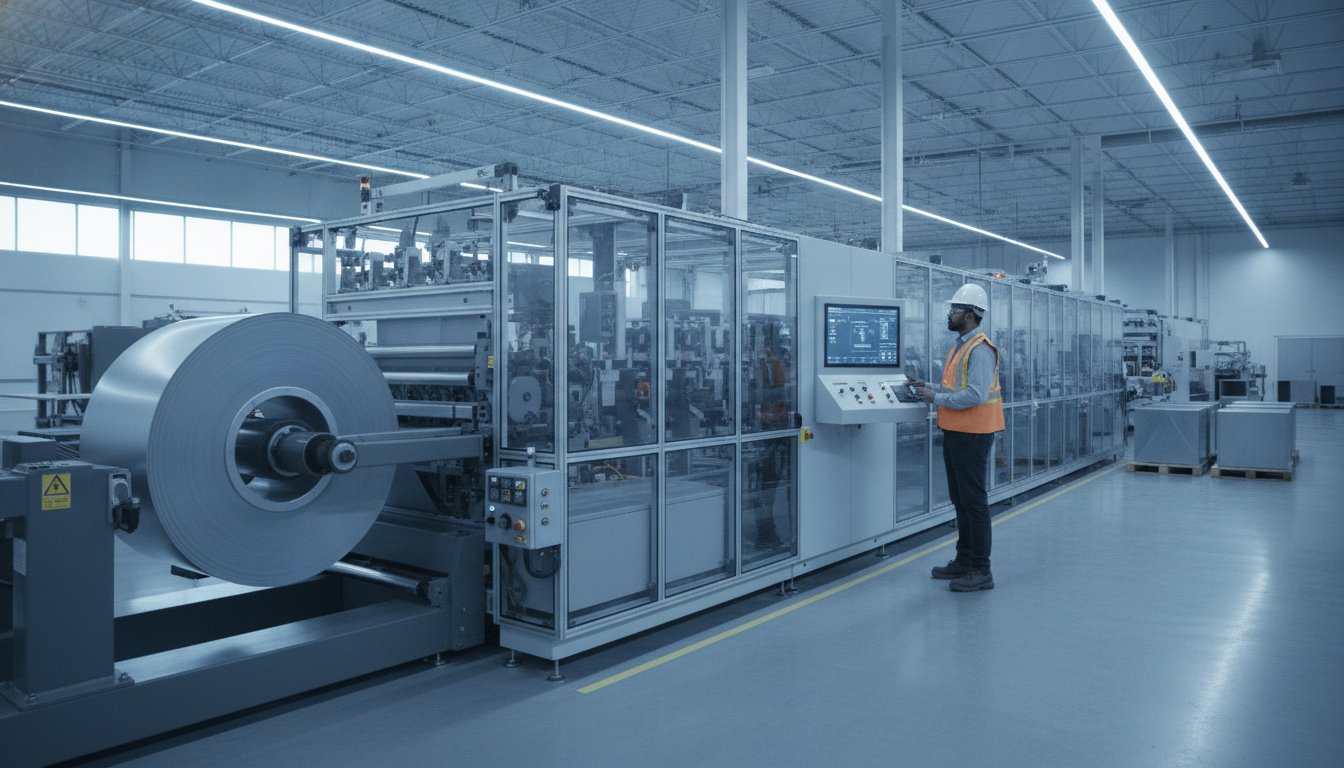
Coil line duct fabrication represents the pinnacle of automated HVAC manufacturing. It is a high-speed system that takes raw metal coils and processes them into finished rectangular duct sections in a single, continuous workflow. Unlike traditional methods that rely on manual shearing and separate braking stations, a coil line integrates every step into one machine. This transition from manual labor to mechanical precision is why automation is now the backbone of high-volume production. When professionals ask What is Coil Line Duct Fabrication? they're looking for an answer that balances speed with technical precision. Essentially, it's the automated creation of the conduits used for air distribution.
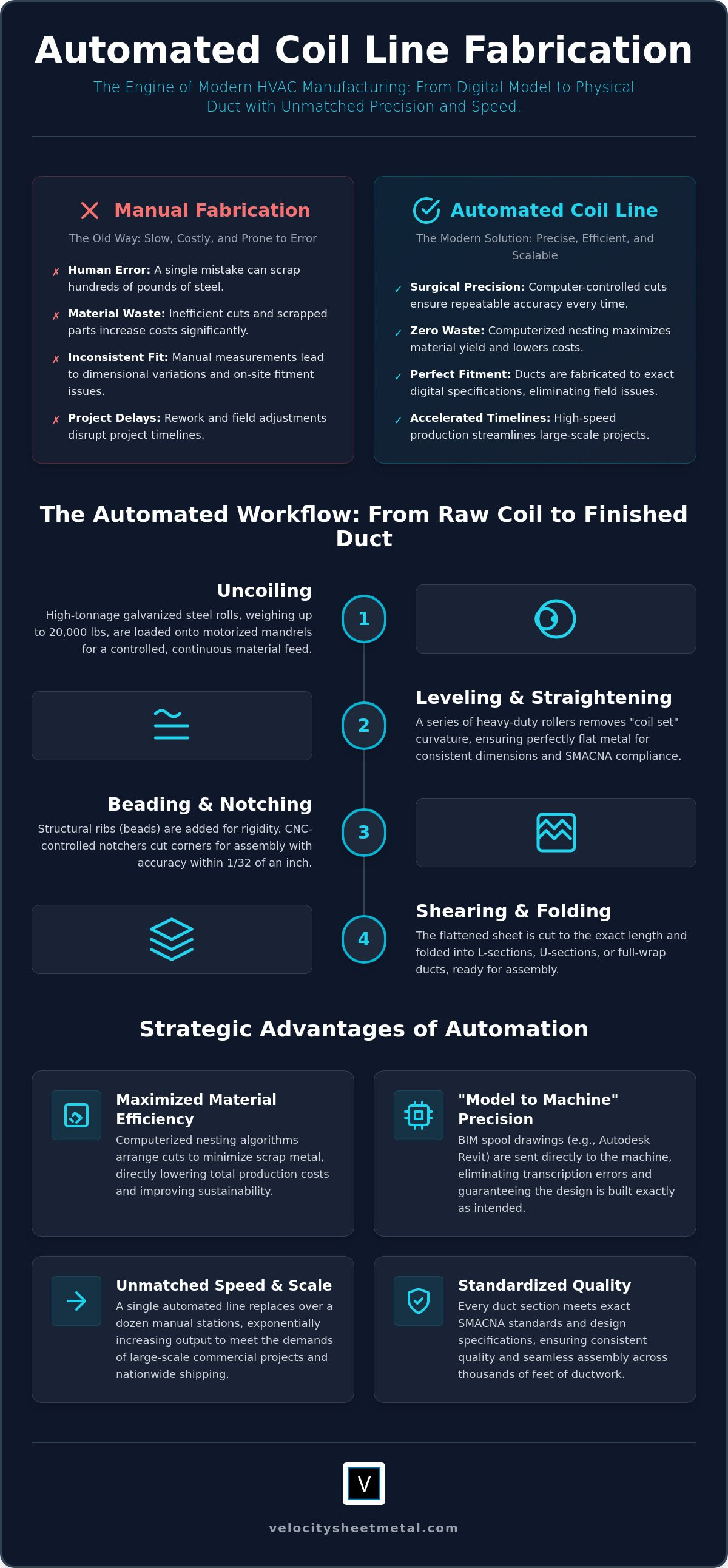
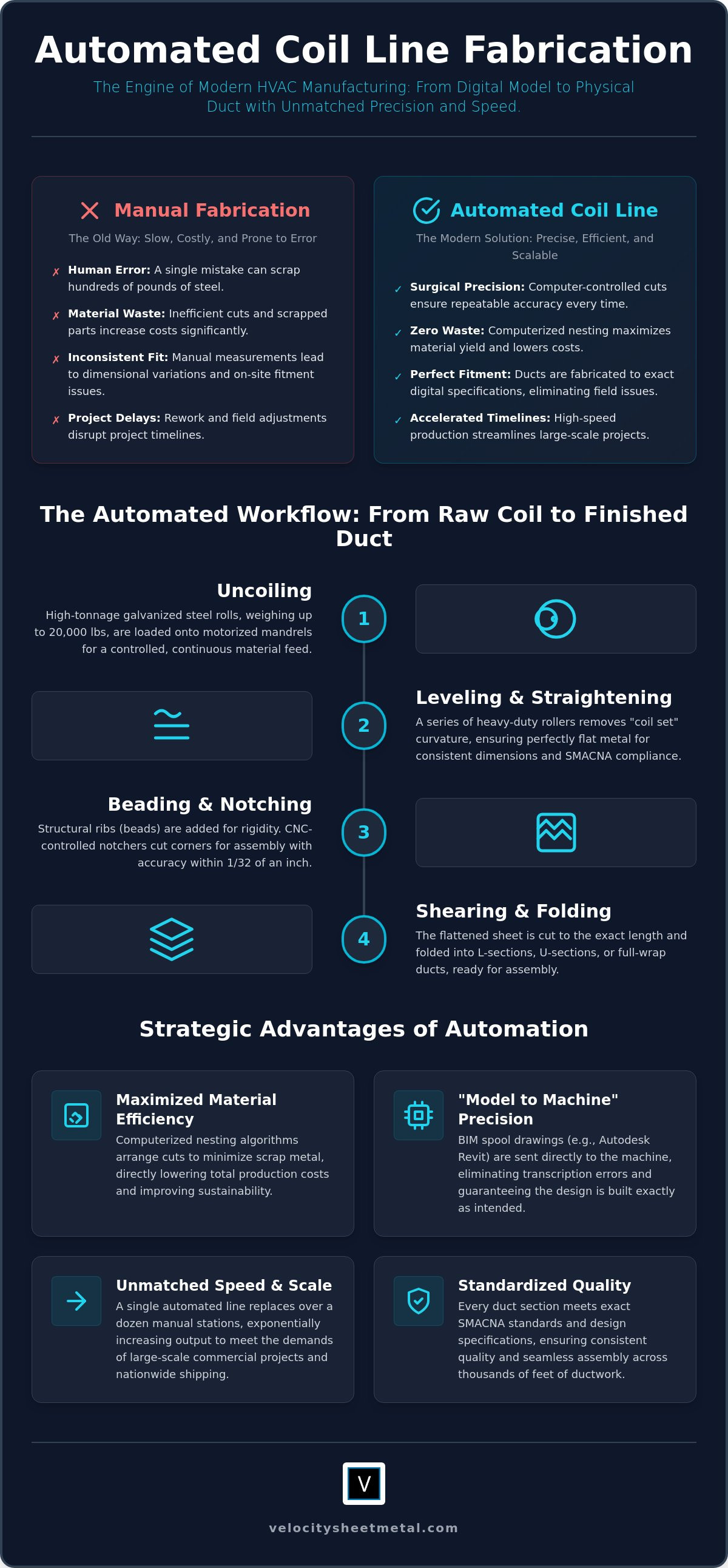
The system relies on a sequence of specialized components. It starts with uncoilers that manage high-tonnage metal rolls. From there, the metal moves through straighteners to remove "coil set" and bead rollers to add structural rigidity. Finally, integrated notchers and shears cut the metal to exact specifications based on digital inputs. This removes the "measure twice, cut once" delay of manual shops. It's fast. It's accurate. A single machine replaces a dozen manual stations, cutting labor costs while boosting accuracy. It's the engine that drives modern sheet metal shops.
The Evolution of Ductwork Manufacturing
The "tin shop" of the past relied on hand-notching and manual layout. It was slow and prone to human error. Modern CNC-controlled precision has reduced the physical footprint of the shop while exponentially increasing output. Digital integration allows a design file to travel from an engineer's desk directly to the machine. This "model-to-machine" transition ensures that what's designed is exactly what's built. The shift hasn't just increased speed; it has standardized quality across thousands of feet of ductwork.
Materials and Gauges in Coil Production
Most commercial projects utilize galvanized steel coils because they provide the necessary structural integrity for high-pressure systems. A modern coil line handles a range of gauges, moving seamlessly from light residential specs to heavy industrial requirements. Optimizing material yield is critical. By using computerized nesting, the system minimizes scrap. This efficiency is vital when material prices fluctuate. It ensures every square inch of the coil is used effectively, from the first uncoiling to the final shear. The result is a more sustainable, cost-effective production cycle for large-scale projects.
The Automated Workflow: How a Coil Line Operates
A modern coil line duct fabrication system operates like a surgical assembly line. It moves material through four distinct stages with zero idle time. The efficiency of coil line duct fabrication lies in its ability to handle these stages without constant human intervention. The process begins with Uncoiling. High-tonnage metal rolls, often weighing up to 20,000 pounds, are loaded onto motorized mandrels. These units ensure a controlled, consistent feed of material into the line. Without this tension control, the metal could buckle or feed unevenly, ruining the entire run.
Next comes Leveling and Straightening. Metal stored in rolls naturally retains a "coil set," or a slight curvature. The coil line passes the sheet through a series of heavy-duty rollers to flatten it completely. This is crucial. If the duct walls aren't perfectly flat, they won't meet SMACNA standards for pressure and seal. Flat metal also ensures that subsequent notches and folds are geometrically perfect. This mechanical correction is one of the many Strategic Advantages: Why Automation Beats Manual Fabrication when compared to traditional hand-leveling methods.
The third stage is Beading and Notching. Here, the machine adds structural ribs and cuts out the corners for assembly. Finally, the Shearing and Folding station cuts the sheet to the exact length required. Depending on the project, the machine can produce L-sections, U-sections, or full wraps. It's a seamless transition from raw coil to a ready-to-ship product. It's fast. It's accurate. It eliminates the guesswork that often plagues manual shops.
Precision Notching for Seamless Assembly
Assembly speed depends entirely on the quality of the notch. A coil line prepares corners for TDC/TDF or S-and-Drive connections with surgical accuracy. CNC-controlled notchers place every cut within 1/32 of an inch. This precision eliminates the need for manual hammering or field adjustments. When the duct arrives at the job site, the corners align perfectly. This reduces labor hours and prevents the air leakage often caused by poorly fitted manual notches. For contractors managing tight schedules, this accuracy is non-negotiable.
Structural Integrity through Integrated Beading
Rectangular ducts require reinforcement to prevent "oil canning" or vibrating under pressure. Instead of manual cross-breaking, which is labor-intensive and inconsistent, the coil line rolls beads directly into the metal. These automated patterns provide superior structural rigidity. Integrated beading also improves airflow efficiency by maintaining a consistent internal profile. This reduces turbulence and noise, creating a quieter, more efficient HVAC system. If you're looking to streamline your next project, consider a BIM-coordinated fabrication partner who understands these technical nuances.
Strategic Advantages: Why Automation Beats Manual Fabrication
Manual fabrication often hides its true costs in the scrap bin. While small shops claim flexibility, they struggle with the hidden overhead of material waste and human error. Transitioning to coil line duct fabrication eliminates these variables by replacing manual shearing with computerized precision. The return on investment isn't just about speed; it's about the total cost of production. Automation allows you to produce hundreds of feet of ductwork in the time it takes a manual crew to cut ten sections. This efficiency shifts the bottleneck from the shearing station to the assembly area, where your skilled labor is most valuable.
Consistency is the hallmark of a high-performing HVAC system. Every section produced on an automated line is identical to the last. This uniformity ensures a perfect fit during installation, preventing the "field adjustments" that derail project timelines. By adopting an integrated approach to coil lines, manufacturers can synchronize their production schedules with real-time site requirements. This level of control is impossible in a manual environment where a single miscalculation can scrap an entire sheet of galvanized steel. Automation doesn't just work faster; it works smarter.
Maximizing Material Yield
Material costs represent a significant portion of any commercial HVAC bid. Manual layout and shearing typically result in scrap rates of 15% or higher. In contrast, coil line duct fabrication utilizes advanced nesting software to calculate the most efficient cut patterns on the coil. This reduces scrap rates to less than 2%. The cost savings on raw metal alone can be substantial on large-scale projects. Beyond the financial benefits, reducing metal waste supports environmental goals by minimizing the industrial footprint of the project. It's a cleaner, more profitable way to build.
Shortening Project Lead Times
Aggressive construction schedules leave no room for manufacturing delays. Automated production allows for "on-demand" fabrication, moving projects from a digital spool drawing to a finished product in hours rather than days. This speed is essential for large-scale commercial developments that require massive volumes of rectangular duct delivered in tight windows.
- Produce high-volume orders with zero lead-time inflation.
- Maintain project momentum with rapid site-delivery capabilities.
- Utilize national shipping logistics to support multi-site accounts across the US.
Precision Engineering: BIM Integration and Industry Standards
High-volume production fails without a digital backbone. Manual shops often rely on paper drawings and hand-entered measurements. This is where the process breaks down. In an automated shop, the digital model is the single source of truth. The transition from a 3D design to a physical product must be seamless. Precision engineering makes this possible by linking BIM data directly to the factory floor. It converts a complex digital file into a tangible asset with zero data loss.
The "Model to Machine" workflow is the standard for modern efficiency. Using software like Autodesk Revit 2026, engineers create precise digital representations of the HVAC system. We export these spool drawings directly to the machine controller. This eliminates human transcription errors between the engineer and the fabricator. There is no manual data entry. No misread tape measures. The coil line duct fabrication process starts with a digital file and ends with a physical asset that matches the model exactly. It's a straight line from design to delivery.
Adherence to SMACNA standards is built into the software logic. Whether a project requires the HVAC Duct Construction Standard, Metal and Flexible, 4th Edition, or specific industrial standards, the machine ensures compliance. Automation selects the correct material gauge based on the specified pressure class. This ensures every section of rectangular duct meets the structural requirements of the building code. It provides peace of mind for engineers and contractors who cannot afford a failed inspection. Compliance isn't just a goal; it's a programmed reality.
Mechanical Spooling and BIM Coordination
BIM coordination isn't just a design step. It's a fabrication strategy. We identify collisions with pipes, beams, or electrical conduits before the first coil is unrolled. This proactive approach prevents field collisions that derail schedules. Velocity Sheet Metal integrates BIM Coordination and Spool Drawings to streamline the entire production cycle. From digital concept to site delivery, our process ensures that every piece is numbered and ready for rapid assembly. This coordination reduces field labor hours and eliminates the need for on-site modifications.
Quality Control and Tolerance Standards
Tolerance is the difference between a system that works and one that whistles. We maintain strict tolerances for high-velocity HVAC systems, often holding dimensions within 1/32 of an inch. Automated testing and verification ensure that every duct section matches the digital spool drawing. This precision is vital for meeting national building codes and performance standards. By removing the variability of manual fabrication, we provide a product that is consistent, reliable, and ready for high-pressure applications. It's a superior build for a superior system.
If you're ready to eliminate field collisions and speed up your installation, partner with Velocity Sheet Metal for BIM-integrated fabrication.
Scaling Production with Velocity Sheet Metal
Scaling is the ultimate test of a fabrication partner. Velocity Sheet Metal provides the industrial infrastructure to support large commercial projects across the US. Our coil line duct fabrication capabilities allow us to serve as a high-volume hub for contractors and OEMs who require consistency at scale. We don't just build ductwork; we provide a predictable supply chain for complex builds. This reliability is critical for national accounts that manage multiple project sites simultaneously and cannot afford localized delays. We act as the essential bridge between your digital files and the physical job site.
National Distribution and Logistics
Shipping thousands of feet of rectangular duct requires more than just a truck. We package and ship high-volume orders using specific methods to ensure site arrival integrity. Every piece is secured to prevent damage during transit, which reduces the logistical burden on mechanical contractors. You won't have to worry about field repairs for damaged sections or missing components. We maintain consistent production standards across every order, ensuring that no matter the project's location nationally, the quality remains identical. It's about delivering a standardized product that fits perfectly every time.
Our capabilities extend beyond the coil line to provide a complete fabrication solution. We offer a comprehensive suite of services, from automated rectangular duct production to custom laser cutting. This versatility means you can source your entire duct package and specialized fittings from a single, reliable partner. Velocity is built on a foundation of precision, speed, and industrial reliability. We understand that your reputation depends on the quality of the components we provide, and we take that responsibility seriously. From the initial digital concept to the final site delivery, our process is optimized for your success.
Partnering for Large-Scale Success
Our management team brings 50+ years of combined experience to every project. This expertise translates directly to project efficiency and technical problem-solving. We've seen the common pitfalls of large-scale commercial infrastructure projects and built our process to avoid them. By integrating BIM coordination with high-speed coil line duct fabrication, we provide a turnkey solution for modern construction. Our track record includes high-volume delivery for commercial infrastructure projects where precision and timing were non-negotiable.
Speed and precision are the engines of our operation. We're a tech-savvy partner obsessed with detail and delivery. If you're managing a high-volume project, you need a partner who can keep pace with your aggressive schedule. Don't let manufacturing bottlenecks or manual errors slow your momentum. Get a quote for your next high-volume duct project and experience the difference that automated precision makes for your bottom line.
The Competitive Edge in Commercial Fabrication
High-volume commercial projects demand a manufacturing process that keeps pace with aggressive site schedules. Transitioning to automated coil line duct fabrication isn't just an upgrade; it's a strategic necessity. This technology slashes material waste and ensures every section meets SMACNA pressure classes with surgical precision. By removing the variability of manual labor, you secure a predictable timeline and a perfect field fit. It converts your digital BIM data into physical assets with zero data loss.
Velocity Sheet Metal brings 50+ years of combined management experience to your project. We bridge the gap between digital design and physical delivery through full BIM coordination services and standardized production. Our national shipping capabilities ensure that high-volume accounts receive consistent, high-quality ductwork regardless of project location. It's time to eliminate administrative delays and field collisions. Request a quote for automated coil line duct fabrication today and experience the speed of modern manufacturing. Your next large-scale project deserves the reliability of a tech-savvy fabrication partner.
Frequently Asked Questions
What is the difference between a coil line and a plasma table?
A coil line is a continuous production system for straight rectangular duct, whereas a plasma table is used for cutting specialized fittings and irregular shapes. While the coil line processes raw metal rolls into finished sections, the plasma table requires flat sheets and manual assembly for the resulting components. For high-volume straight runs, the coil line is significantly faster and more efficient.
Can automated coil lines handle custom duct sizes?
Automated systems handle custom rectangular dimensions with ease as long as they fall within the machine's width and gauge capacity. Operators program specific lengths and widths directly into the CNC interface for immediate fabrication. This flexibility makes coil line duct fabrication ideal for both standard commercial runs and unique project requirements that demand non-standard dimensions.
What metal gauges are typically used in coil line fabrication?
Most systems process galvanized steel ranging from 26-gauge to 16-gauge. The specific gauge depends on the duct's dimensions and the required pressure class for the HVAC system. Heavier 18 and 16-gauge materials are typically reserved for large-scale industrial applications or high-pressure commercial zones where structural rigidity is paramount.
Does automated ductwork meet SMACNA standards?
Automated fabrication is engineered to meet and exceed SMACNA HVAC Duct Construction Standards. The machine's software logic automatically applies the correct metal gauge, beading patterns, and notch types based on the project's pressure class. This ensures every piece of ductwork is compliant with national building codes and ready for inspection.
How does coil line fabrication reduce overall project costs?
Coil line duct fabrication reduces costs by minimizing material scrap and lowering labor requirements. Computerized nesting software keeps metal waste below 2%, compared to the 15% scrap rate common in manual shops. Additionally, the speed of automation allows you to redirect skilled labor from basic shearing to more complex assembly and installation tasks.
Can you ship rectangular ductwork nationwide?
Velocity Sheet Metal offers nationwide shipping for all high-volume rectangular duct orders. We use specialized packaging and loading techniques to ensure the ductwork arrives at your job site without structural damage or "oil canning." This allows contractors across the US to access high-precision, automated fabrication regardless of their local shop's capacity.
What information is needed to start a coil line production run?
Production begins once we receive finalized spool drawings or digital BIM files. These inputs must specify the metal gauge, duct dimensions, and the type of corner connections required, such as TDC or TDF. Providing clean digital data allows us to move directly from the design phase to the fabrication floor without administrative delays.
How does BIM software interact with the coil line machinery?
BIM software communicates with the machinery through direct data exports that eliminate the need for manual transcription. The machine reads the digital spool drawings and automatically sets the notch locations and shear points. This "Model to Machine" integration ensures that the physical ductwork matches the digital building model with surgical precision.