Precision Sheet Metal Fabrication Services: The 2026 Procurement Guide
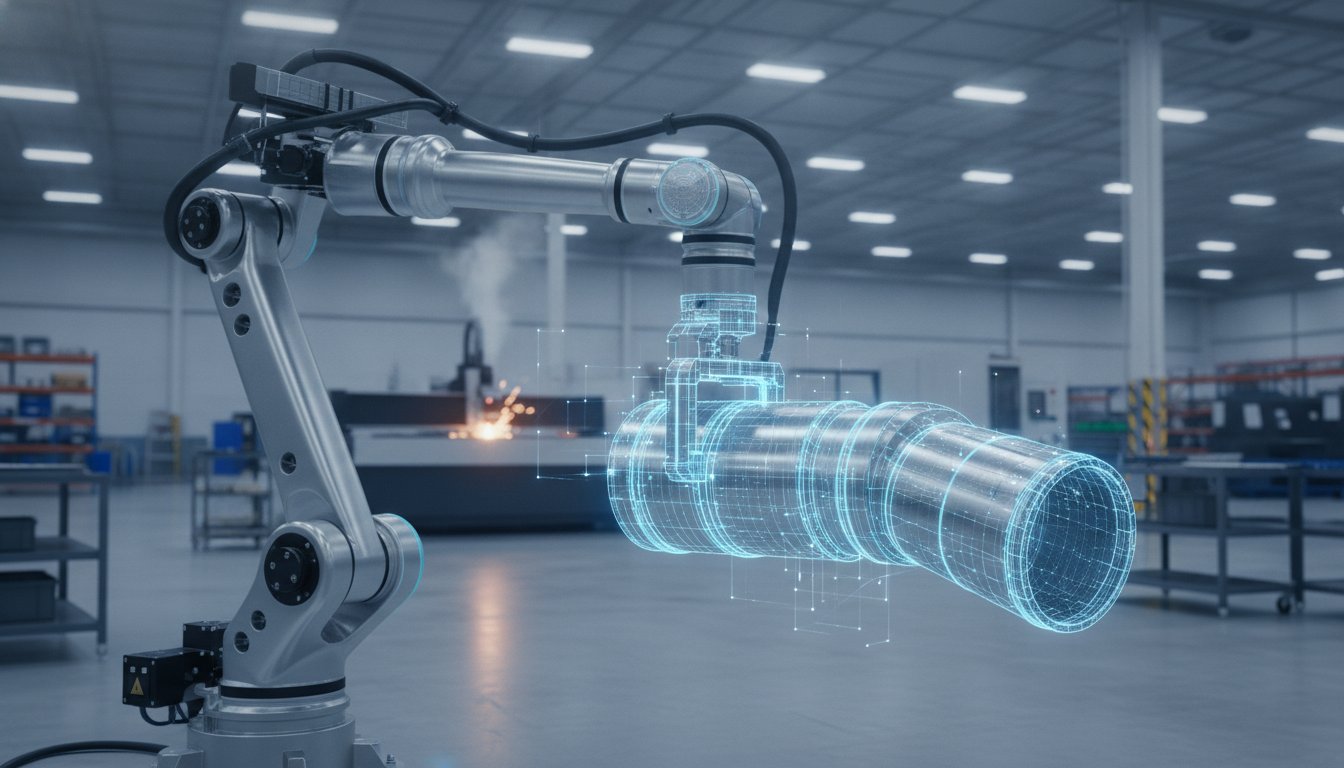
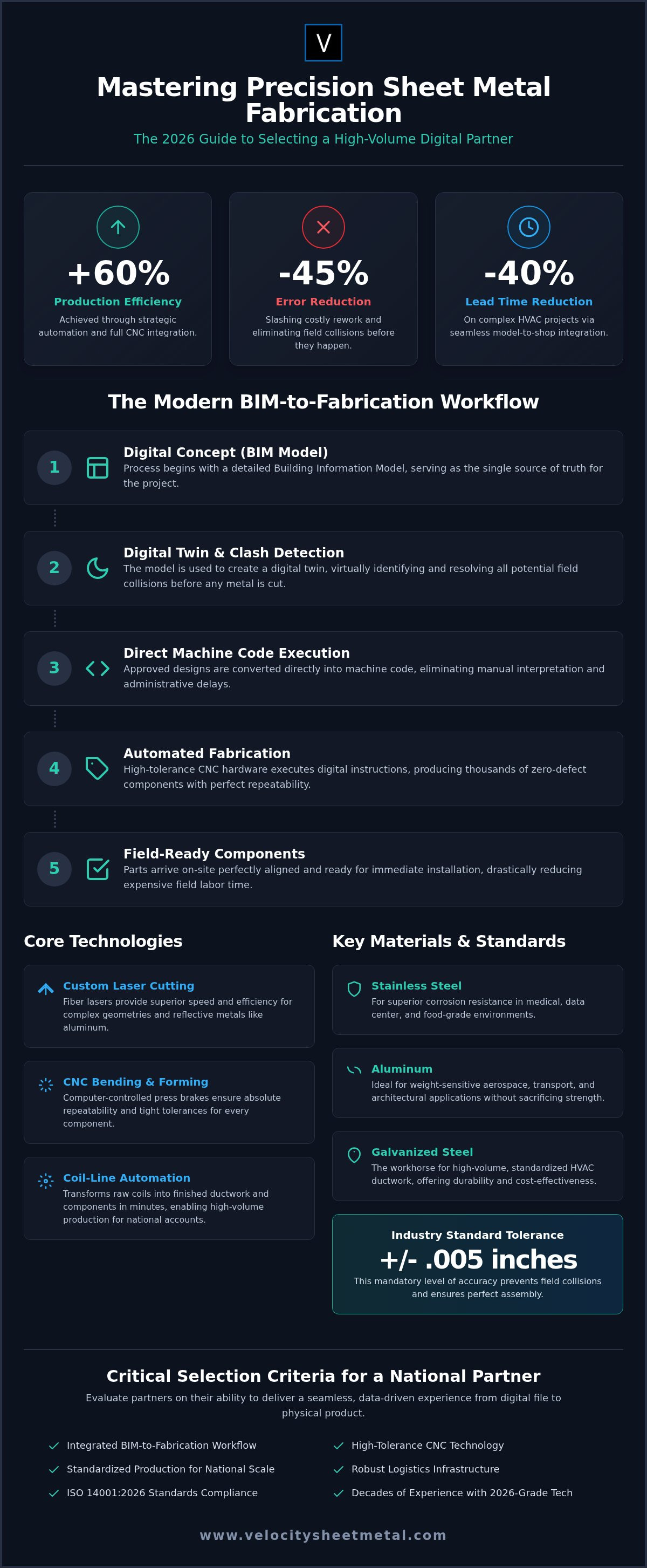
Automation and CNC integration now increase production efficiency by 60% while slashing errors by nearly 45%. In 2026, your strategy for procuring precision sheet metal fabrication services shouldn't just be about finding a shop with a laser; it's about finding a digital partner that eliminates field collisions before they happen. You've likely dealt with the frustration of rework, slow lead times for custom curb adapters, and inconsistent quality across national sites. It's a drain on your timeline and your budget. We agree that field installation time is your most expensive variable and that coordination shouldn't be a guessing game.
This guide provides the roadmap to master the technical criteria and digital workflows required to select a high-volume fabrication partner. You'll learn how to standardize production for national accounts and implement a seamless BIM-to-fabrication workflow. We'll break down the transition to ISO 14001:2026 standards and the model-to-shop integration that can reduce lead times by up to 40% on complex HVAC projects. From initial digital concept to final physical result, here is how to ensure your next national rollout is defined by precision rather than rework.
Key Takeaways
- Modern fabrication has shifted from manual craft to automated, data-driven workflows that prioritize high-tolerance CNC technology for maximum efficiency.
- Master the BIM-to-fabrication workflow to create a digital twin that eliminates field collisions and costly rework in precision sheet metal fabrication services.
- Evaluate core technologies like automated coil-lines and custom laser cutting to ensure your partner can handle high-volume production and complex geometries.
- Identify the specific logistics infrastructure and standardized production capacity required to support national industrial accounts and large-scale HVAC rollouts.
- Bridge the gap between digital files and physical products by selecting an expert operator that combines decades of experience with 2026-grade automation.
What are Precision Sheet Metal Fabrication Services in 2026?
Precision sheet metal fabrication services have evolved from a craft-based workshop model into a high-speed, data-driven manufacturing ecosystem. In 2026, the industry has largely abandoned manual shearing and bending in favor of high-tolerance CNC technology. This process isn't just about cutting metal; it's about the surgical transformation of raw stock into specific components with absolute repeatability. For national industrial projects and OEM supply chains, this shift means moving from "close enough" to "perfectly aligned." Precision ensures that every component fits into a complex assembly without field modification. It's the essential bridge between a digital concept and a physical product that functions exactly as designed.
The role of precision sheet metal fabrication services in modern infrastructure is to provide a reliable, clash-free component supply for complex OEM chains. When you're managing national rollouts, you can't afford the rework that comes from poor coordination. Precision fabrication reduces material waste by optimizing nested cuts on every sheet. It ensures that components for data centers, medical facilities, and industrial HVAC systems arrive at the site ready for immediate installation. By leveraging automated workflows, fabricators can now guarantee consistency across thousands of parts, regardless of the project's scale or location.
Key Materials and Tolerances
Industrial projects demand specific performance from raw sheet metal based on environmental exposure and structural requirements. With steel accounting for 54% of the fabrication market, maximizing material yield through precision nesting is a significant financial driver. We primarily utilize:
- Stainless steel for superior corrosion resistance in medical or food-grade environments.
- Aluminum for weight-sensitive aerospace or transport applications.
- Galvanized steel for high-volume, standardized HVAC ductwork.
In this high-stakes environment, the industry standard for precision parts is a tolerance of +/- .005 inches. This level of accuracy is mandatory for modern infrastructure, where even a fraction of an inch can cause catastrophic field collisions. The industry's shift toward the ISO 14001:2026 standard also reflects a growing emphasis on climate resilience and sustainable resource use in material selection. Material choice is never an afterthought; it's a technical decision that dictates the longevity and reliability of the final assembly.
The Impact of Automation on Lead Times
Automation is the primary driver of reduced lead times in 2026. CNC-driven machines eliminate human error during the shearing and punching phases, ensuring that the first part is as accurate as the thousandth. We've transitioned from traditional shop drawings that require manual interpretation to direct machine-code execution. This digital-to-physical workflow removes the administrative delays that typically bog down production. Modern precision fabrication is a data-driven process where high-tolerance CNC hardware executes direct digital instructions to produce zero-defect components. From the initial BIM file to the final finished part, every step is optimized for speed and accuracy.
Core Technologies: Laser Cutting, Bending, and Coil-Line Automation
The modern fabrication floor is a hierarchy of speed and accuracy. It operates as a unified digital ecosystem where raw coils and sheets transform into complex assemblies in minutes. For procurement managers, understanding the core technologies behind precision sheet metal fabrication services is the only way to vet a partner’s true capacity. You need more than just equipment. You need an integrated workflow that scales. From raw coil to finished duct; from digital file to laser-cut part. Every station must be optimized for zero-defect output.
Custom Laser Cutting for Industrial Components
Custom laser cutting is the preferred method for on-demand part production because it achieves complex geometries that traditional punching cannot match. Fiber lasers are the modern standard for high-speed cutting of thinner gauges and reflective metals like aluminum. CO2 lasers still hold value for specific specialized materials, but the industry has shifted toward fiber for its superior energy efficiency and narrower kerf. This technology allows us to move directly from a CAD file to a finished part without the delays of custom tooling. If you're sourcing parts for an OEM line, check out our precision laser cutting services to see how we handle high-tolerance requirements.
Automated Coil-Line vs. Manual Duct Fabrication
Efficiency in high-volume HVAC projects depends on automated coil-line rectangular duct production. A fully automated coil-line transforms raw metal coils into finished, beaded, and notched duct segments in seconds. Manual fabrication can't compete with this speed. Automated systems increase production efficiency by up to 60% while reducing human error by nearly 45%. This creates a massive cost-benefit advantage for large-scale commercial projects where thousands of feet of ductwork are required. You can learn more about this high-output process in our guide to coil line duct fabrication.
Precision Bending and Forming
Repeatability in precision sheet metal fabrication services relies heavily on CNC press brake technology. Modern brakes utilize "Automatic Angle Measurement" to provide real-time feedback during the bend, compensating for material springback instantly. This ensures that every bracket, enclosure, or fitting is identical to the last. To avoid common forming defects like cracking or uneven flanges, we utilize precise material calculations and specialized tooling. The Fabricators & Manufacturers Association, International (FMA) notes that these technological advancements are critical for maintaining the +/- .005 inch tolerances required in 2026. For high-gauge components that require absolute accuracy, explore our CNC press brake services for OEMs. Our team at Velocity Sheet Metal bridges the gap between digital design and high-volume physical output.
BIM Coordination: The Bridge Between Design and Delivery
Digital coordination is the foundation of modern manufacturing. It is the most critical step in precision sheet metal fabrication services because it eliminates the guesswork of field installation. We utilize the "Digital Twin" concept to model every inch of the HVAC system before a single piece of metal is cut. This virtual prototype ensures that the physical components fit perfectly within the building's structural constraints. By modeling the entire system in a 3D environment, we identify and resolve clashes with plumbing and electrical systems before they reach the job site. This proactive approach prevents the expensive field collisions that typically derail construction timelines.
The Precision Metalforming Association emphasizes that digital-to-physical integration is what separates high-performance shops from traditional workshops. This coordination allows for a level of detail that manual drafting simply cannot reach. Data flows from the coordinated model to the shop floor, driving automated machinery with surgical precision. This is the essential bridge between a design intent and a tangible, high-quality product. It transforms the fabrication process from a disconnected series of tasks into a single, continuous line of production.
Mechanical Spooling and Spool Drawings
Spool drawings are the detailed maps required for factory execution and field assembly. They break down complex duct runs into manageable, pre-fabricated segments or "spools." This approach allows for extensive off-site pre-assembly, which significantly reduces on-site labor costs and safety risks. When segments are spooled correctly, field installation is as simple as following a numbered sequence. For a deeper look at how we manage these digital files to ensure zero-clash execution, see our guide on BIM clash detection for HVAC fabrication.
Digital-to-Physical Workflow Comparison
Traditional shop drawings are prone to human error and interpretation delays. In contrast, BIM-integrated fabrication uses the coordinated model to generate machine code directly. This eliminates the "transcription error" that occurs when moving from paper to the factory floor. Data moves from the engineer’s model directly to the CNC laser and automated coil-line. This workflow is essential for mechanical contractors who need to meet tight construction schedules without the setback of field rework. It ensures that every component produced through our precision sheet metal fabrication services is ready for immediate, clash-free installation upon delivery.
Critical Selection Criteria for National Fabrication Partners
National rollouts demand more than local proximity. They require a partner with the industrial infrastructure to scale. Auditing a fabricator’s capacity for high-volume production is the first step in securing precision sheet metal fabrication services that actually deliver on their promises. It’s about the digital backbone. You need a partner who treats your project as a single data stream rather than a series of disconnected orders. Inconsistent quality across national sites is the primary driver of field rework. To avoid this, you must prioritize partners who utilize automated systems to ensure every part is identical, whether it’s destined for a site on the East Coast or the West.
Logistics infrastructure is the second pillar of a successful national partnership. A fabricator might have the best lasers in the world, but if they lack the shipping reach to support multi-state project sites, they aren’t a national partner. You need real-time tracking for critical path components. When a project is on the line, you don’t have time for administrative delays or "missing" shipments. Quality control must be standardized through rigorous protocols, including the transition to ISO 14001:2026 standards, ensuring that environmental and quality management are baked into every production run.
Standardization for National Accounts
Consistency is the only benchmark that matters for national accounts. The rectangular ductwork installed in a New York facility must match the exact specifications and quality of the ductwork in California. Partnering with a single fabricator for multi-state rollouts eliminates the regional variance that often plagues large industrial projects. We achieve this through precision sheet metal fabrication services that rely on standardized reporting and BIM integration across all project phases. This unified approach ensures that every component meets the original design intent, reducing the administrative burden on your procurement team and ensuring a perfect fit every time.
On-Demand Parts and Prototyping
Makers, engineers, and OEMs often need to pivot from high-volume production to specialized prototyping without missing a beat. A truly capable partner can transition from automated coil-line duct fabrication to intricate, custom laser-cut parts instantly. This "on-demand" flexibility is essential for meeting tight construction schedules. Logistics play a vital role here; shipping speed for critical components like custom curb adapters and transition fittings can make or break a project. If a curb adapter is late, the entire rooftop unit installation stalls. We prioritize shipping speed and tracking to ensure these critical path items arrive exactly when needed. For a reliable national fabrication partner that bridges the gap between digital files and physical delivery, accuracy is the only option.
Velocity Sheet Metal: On-Demand Production for National Accounts
Velocity Sheet Metal serves as the essential bridge between your digital design files and a tangible, high-performance product. We combine 50+ years of combined industry management experience with 2026-grade automation to eliminate the friction typically found in industrial procurement. Our workflow is built for speed. We don't just provide precision sheet metal fabrication services; we provide a data-driven manufacturing solution for national accounts. From the initial BIM file to the final logistics of delivery, every step is methodical and transparent. We operate with the pragmatism of a hands-on workshop and the technical capability of a high-end engineering firm. Accuracy isn't a goal here; it's the baseline.
Our facility is centered around high-output technology. We utilize an automated coil-line for rectangular duct and specialized equipment for spiral and round systems. This allows us to scale production for national rollouts while maintaining surgical precision. We understand that field collisions and rework are the primary enemies of your budget. By integrating BIM coordination and spool drawings directly into our production line, we ensure that every component arrives at the site ready for a clash-free installation. We don't just cut metal; we execute data.
HVAC Solutions for Mechanical Contractors
Mechanical contractors need a partner who can keep pace with aggressive construction schedules. We deliver fast-turnaround custom curb adapters and plenum boxes that eliminate site-level delays. Our high-volume production capabilities include both automated rectangular duct and spiral systems designed for national industrial projects. Speed is our priority. We've optimized our HVAC duct fabrication for mechanical contractors to move from order to shipment with minimal lead time. We provide the components you need to keep your field teams moving without the setback of poor fitment or missing parts. Our coil-line automated rectangular duct production ensures that high-volume orders are processed with 60% more efficiency than traditional manual shops.
Industrial and OEM Support
For OEMs and industrial engineers, we offer on-demand part production that bridges the gap between prototyping and mass manufacturing. We utilize custom laser cutting and CNC press brake bending to achieve the +/- .005 inch tolerances required for precision assemblies. Our approach is standardized across all project sites. The quality you receive on a project in one state is identical to the quality delivered across the country. We manage the logistics of national shipping to ensure your critical path components arrive exactly when they are needed. Accuracy and delivery are our obsession. We handle the technical review and the machine-code execution so you don't have to manage multiple vendors. If you're ready to secure a partner that values your timeline as much as your specifications, Request a Quote for Your National Project today.
Standardizing Your National Industrial Workflow
Securing precision sheet metal fabrication services in 2026 is no longer about finding a local shop; it's about integrating a digital-first supply chain. You've seen how BIM coordination and automated coil-line production eliminate the traditional bottlenecks of field collisions and rework. By centralizing your production with a partner that bridges the gap between digital files and physical delivery, you ensure that every component arrives ready for immediate, clash-free installation. This methodical approach is the only way to maintain consistency across multi-state project sites.
Velocity Sheet Metal combines 50+ years of combined industry experience with high-speed automation to support your most complex national accounts. Our automated coil-line and reliable nationwide shipping infrastructure are built to handle high-volume demands with surgical accuracy. It's time to move past the administrative delays and manual errors that stall your project's momentum. We're ready to transform your digital designs into tangible results today.
Get an On-Demand Fabrication Quote
Frequently Asked Questions
What is the standard lead time for precision sheet metal fabrication services?
Lead times vary based on project complexity and volume, but automated workflows significantly accelerate the process. Standard ductwork orders often ship within five to ten business days. Custom curb adapters or complex laser-cut components might require more time for technical review and BIM coordination. We prioritize speed by moving digital files directly to machine code. This bypasses the administrative delays common in manual shops and ensures your project stays on schedule.
How does BIM coordination reduce costs in HVAC fabrication?
BIM coordination reduces costs by identifying clashes before fabrication begins, preventing expensive field rework. Research shows that model-to-shop integration can reduce lead times by 20% to 40% on complex projects. By creating a digital twin, we ensure that every component fits perfectly with existing plumbing and electrical systems. This precision eliminates the labor costs associated with manual field adjustments and material waste from discarded, ill-fitting parts.
Can you ship custom ductwork and laser-cut parts nationwide?
Yes, we provide reliable nationwide shipping for all custom ductwork and laser-cut components. Our logistics infrastructure is designed to support national industrial accounts and multi-site project rollouts across the United States. We utilize tracking systems to ensure critical path items, like plenum boxes and transition fittings, arrive on schedule. This capability allows mechanical contractors to standardize their procurement through a single, high-output partner regardless of the project location.
What materials are best for commercial HVAC ductwork?
Galvanized steel is the standard for commercial HVAC ductwork because it balances cost with corrosion resistance. For specialized environments, stainless steel is required for medical or food-grade applications where sanitation is vital. Aluminum is selected for weight-sensitive installations. Material choice depends on environmental exposure and structural requirements. This ensures the final assembly meets long-term durability standards in high-performance industrial settings without unnecessary material waste.
Do you provide on-site HVAC installation or just fabrication?
Velocity Sheet Metal focuses exclusively on the fabrication of high-precision components and does not provide on-site HVAC installation services. We act as the technical bridge between your digital designs and the physical product. Our role is to provide mechanical contractors with ready-to-install segments, such as spiral duct and curb adapters. This specialization allows us to maintain a high degree of accuracy and speed on the factory floor.
What is the difference between automated coil-line and manual rectangular duct production?
An automated coil-line transforms raw metal coils into finished rectangular duct segments in seconds, while manual production involves multiple labor-intensive steps. Automation increases production efficiency by up to 60% and reduces production errors by nearly 45%. Coil-lines provide consistent beading, notching, and folding that manual shearing cannot match. This technology is essential for high-volume precision sheet metal fabrication services where repeatability and speed are the primary procurement drivers.
How do spool drawings improve field installation speed?
Spool drawings improve installation speed by breaking down complex duct runs into manageable, numbered segments for the field crew. These drawings act as a precise assembly map, allowing for off-site pre-assembly of fittings and straight runs. When components arrive at the site as pre-fabricated spools, the field team spends less time on layout and more time on installation. This methodical approach significantly reduces total labor hours on large-scale industrial projects.
What tolerances can your CNC laser cutting services achieve?
Our CNC laser cutting services achieve industry-standard tolerances of +/- .005 inches for most precision parts. This level of accuracy is critical for OEM components and complex assemblies where perfect fitment is mandatory. By using high-tolerance CNC hardware, we ensure that the first part is identical to the thousandth. These precision sheet metal fabrication services allow us to execute intricate geometries that traditional punching or manual cutting methods simply cannot replicate.