Sheet Metal Fabrication Cost Estimator: How to Build a Reliable 2026 Estimate
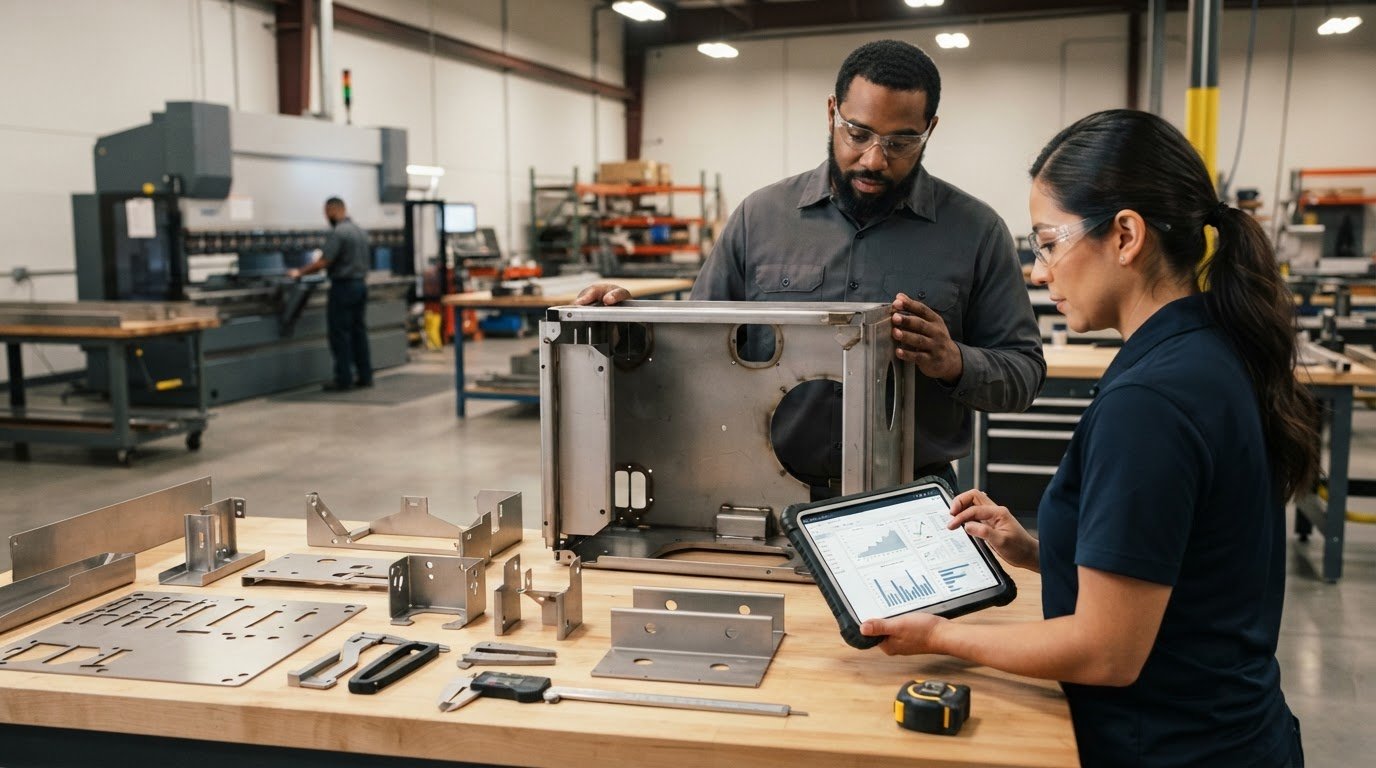
What if the biggest error in an early fabrication budget isn’t the material rate, but the assumptions behind the part? A sheet metal fabrication cost estimator is only as reliable as the project details it uses. Before a detailed quote is available, it’s easy to overlook how thickness, bends, order quantity, finishing, and production route affect the estimate. Two figures also can’t be compared fairly if they cover different operations.
That uncertainty is normal. You can build a more useful early estimate by defining the part and its production requirements clearly. This guide explains the main inputs that drive fabrication estimates, how to compare scope and assumptions, and which design and production choices can reduce avoidable work.
You’ll learn what to prepare for an estimate, from material and geometry to quantity and finish, and how operations such as laser cutting and CNC press brake bending fit into a production plan. We’ll also look at why a reliable estimate connects part design, production route, and order context, helping you make informed cost decisions without relying on guesswork.
Key Takeaways
- A sheet metal fabrication cost estimator supports early planning, but its result depends on the project details and assumptions entered.
- Material, thickness, geometry, production operations, finishing, quantity, and delivery scope all shape an estimate.
- Prepare drawings, material requirements, order quantity, finish, and required operations before building an estimate.
- Compare estimates line by line to spot differences in fabrication scope, assembly, packaging, and delivery.
- Clear project inputs connect design decisions to practical fabrication planning, including laser cutting, HVAC ductwork, and BIM coordination.
What a Sheet Metal Fabrication Cost Estimator Can, and Cannot, Tell You
A sheet metal fabrication cost estimator uses project inputs to approximate the work and cost involved in making a part or assembly. It helps organize assumptions about materials, design, production steps, and order size. It doesn’t guarantee final pricing or replace a fabricator’s review of the design and production requirements.
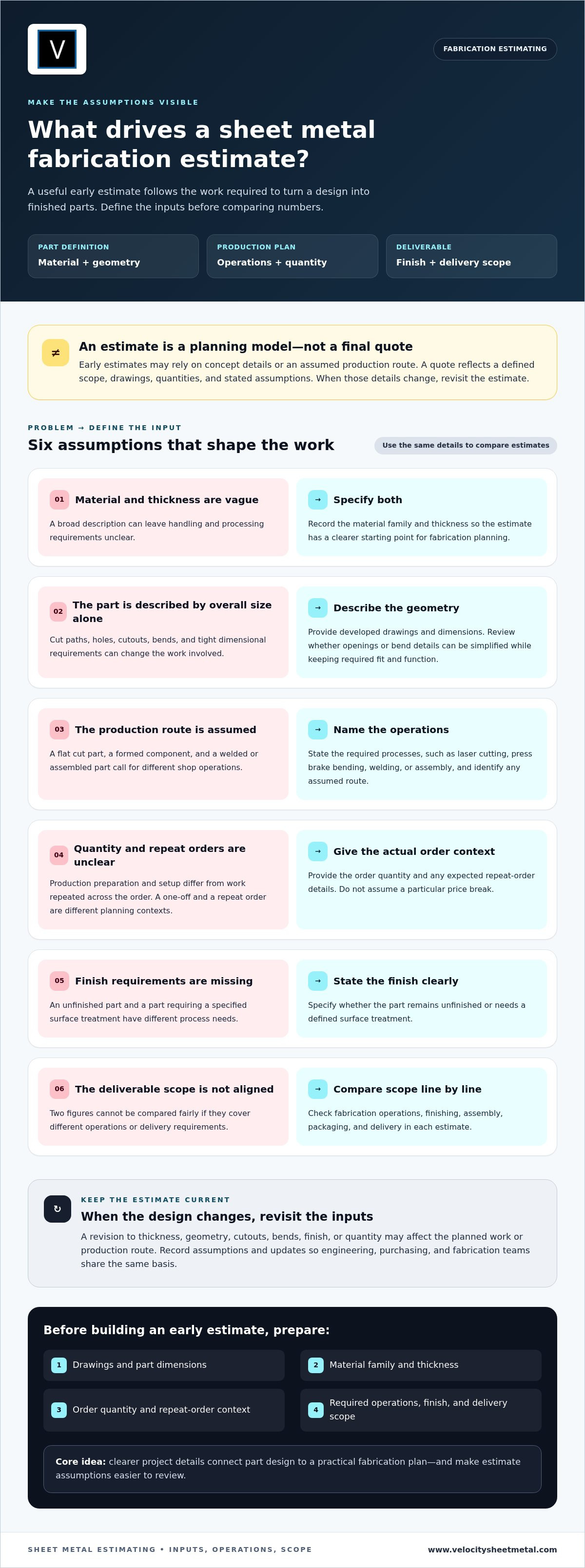
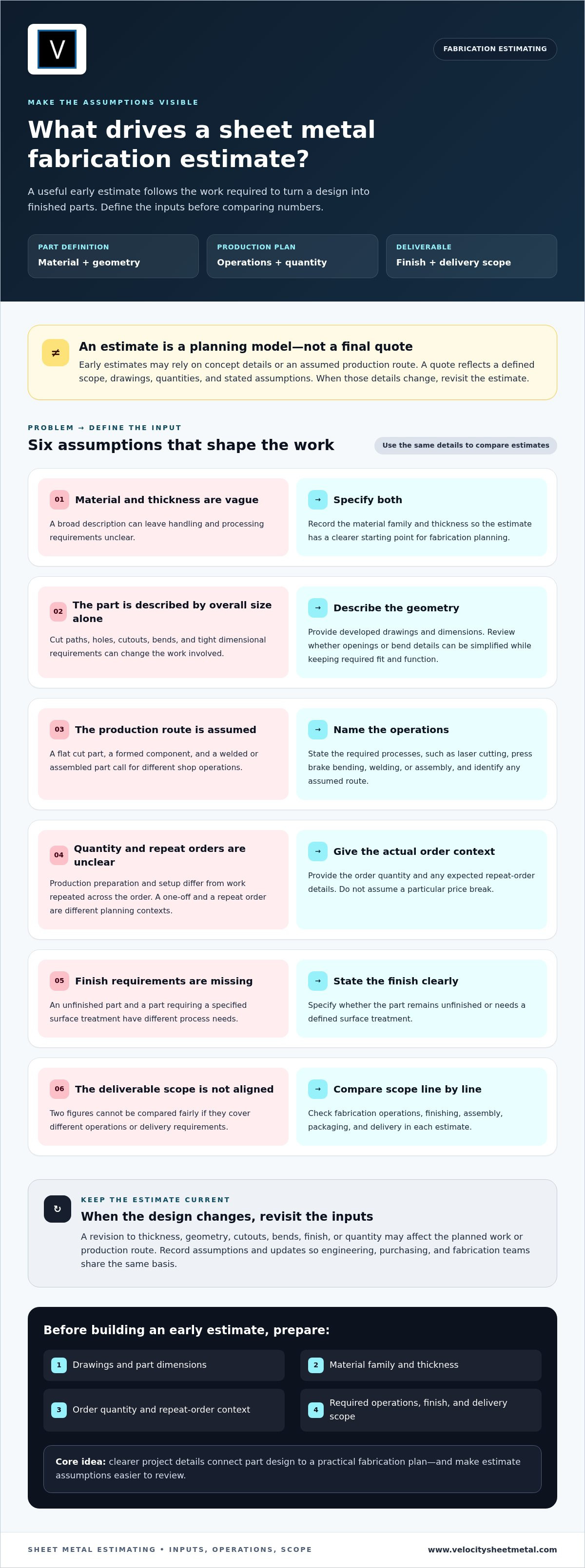
The distinction matters. An early budget estimate uses the information available at that stage, which may include a concept, preliminary dimensions, or an assumed production route. A quote is based on a defined scope, drawings, quantities, and stated assumptions. If those details change, the estimate or quote may need to be revised.
What does a fabrication cost estimator calculate?
An estimator brings together the factors that influence fabrication work. Material type and thickness affect the starting requirements. Geometry, including cut paths, holes, and bends, shapes how a part can be produced. Operations such as laser cutting, press brake bending, finishing, or assembly add steps to the plan. Quantity and delivery scope provide further context for the production run.
For example, consider a sheet metal equipment cover with a flat face, several cutouts, and bent edges. An estimate needs to account for the material and thickness, the part’s dimensions, cutting and bending operations, finish requirements, and the number of covers. A change to the hole pattern or bend layout can affect the planned work, even if the part still looks similar in a sketch.
The estimate makes these inputs visible and gives teams a shared basis for discussion. It doesn’t determine whether a design is structurally suitable, resolve ambiguous dimensions, or replace engineering review. Treat it as a planning model, not a substitute for checking the part and its requirements.
When is an estimate useful in a project?
Use an early estimate to frame budget conversations, compare design directions, and give purchasing teams a clearer basis for planning. At the concept stage, some details may still be assumptions. That’s fine as long as they’re identified. A useful estimate shows what the planning is based on instead of presenting a number as though every production detail has been settled.
As the project moves toward production, replace assumptions with developed drawings and specific requirements. Confirm the material, quantity, finish, and operations in scope. This gives the fabrication plan a stronger foundation and makes it easier to compare the estimate with the intended deliverable.
Keep the estimate current as the design develops. If a revision changes thickness, geometry, cutouts, bends, finish, or quantity, revisit the inputs and document the update. Even a small drawing change can affect the production route or work involved. A clear record of assumptions and revisions helps engineering, purchasing, and fabrication teams stay aligned from concept through production planning.
Which Inputs Drive Sheet Metal Fabrication Cost Estimates?
A useful estimate follows the work required to turn a design into finished parts. Core inputs include material, part geometry, production operations, finishing requirements, quantity, and delivery scope. Together, they define what must be sourced, processed, inspected, assembled, and prepared for delivery.
Record the details, not just the part’s overall dimensions. Material family and thickness affect fabrication planning, while sheet utilization influences how parts can be arranged for cutting. Finish requirements matter too: a part intended to remain unfinished has different process needs from one that requires a specified surface treatment. For a broader view of forming processes, Precision Metalforming Association (PMA) insights provide industry context.
How do material and part design change the estimate?
Material selection and thickness shape the production plan. Different material families can call for different handling and processing considerations, and thickness can influence cutting and bending requirements. The design adds another layer: numerous cutouts, holes, tight dimensional requirements, and multiple bends can introduce extra operations or make handling more involved.
Review each feature against its function. Could several small openings be combined into a simpler cutout? Can bend details be standardized across related parts? These questions don’t mean compromising performance. They help identify where a design might be simplified while retaining its required fit and function. Sheet layout matters too: spacing and part orientation can affect how efficiently a cutting plan uses the material.
How do quantity and production route affect estimating?
Separate the work needed to prepare production from the work repeated for each part. Programming, setup, and initial handling are tied to getting a run ready. Cutting, bending, finishing, and assembly are production steps applied across the order, though the work involved depends on the part and route. A one-off part and a repeat order therefore present different planning contexts. Don’t assume a particular price break; provide the actual quantity and any expected repeat-order details.
The production route connects design features to shop operations. A flat part with a defined cut pattern may need laser cutting. A formed component adds bending, while a welded or assembled part calls for further handling and process steps. State which operations are required and whether finishing, assembly, packaging, or delivery belong in the estimate. This keeps the planned scope clear rather than leaving important work implicit.
- Material: family, thickness, and sheet-use considerations.
- Design: dimensions, cutouts, holes, bends, and functional requirements.
- Process: cutting, bending, welding, finishing, and assembly.
- Order context: quantity, repeat potential, packaging, and delivery scope.
A sheet metal fabrication cost estimator can only reflect the inputs it receives, so make each requirement explicit. For project-specific fabrication planning, Velocity Sheet Metal’s fabrication capabilities include custom laser cutting, CNC press brake bending, and coordinated HVAC ductwork.
How to Build a Sheet Metal Fabrication Estimate Step by Step
A reliable estimate starts with a defined scope, then turns project information into a production plan. Use this sequence to build a working estimate and keep its assumptions visible as the design develops.
- Define the deliverable. State which parts or assemblies are included, the required quantity, and whether finishing, assembly, packaging, or delivery is part of the scope.
- Gather current design information. Collect the latest drawings or models, dimensions, material requirements, and revision status. Identify missing specifications rather than treating them as settled.
- Map the required operations. Note the work needed to make each part, such as cutting, bending, welding, finishing, or assembly. For HVAC projects, clarify the ductwork scope and relevant coordination information.
- Separate confirmed inputs from assumptions. Label each unresolved item and record the assumption used for planning. This shows stakeholders where uncertainty remains and what information could change the estimate.
- Review and update the estimate. Check that the planned route matches the scope, then revise the estimate when drawings, quantities, or requirements change. Compare each version with the applicable drawing revision.
What information should you gather before estimating?
Build a compact input package before using a sheet metal fabrication cost estimator. Include current drawings or models, part dimensions, material and thickness requirements, requested quantity, finish, and all required operations. Add the drawing revision so the estimate is tied to the correct design. Record whether the order is a one-time requirement or part of an expected repeat schedule.
Make scope boundaries explicit. For example, identify whether the request covers fabricated components only or also includes assembly, packaging, and delivery. For ductwork, define the fabrication scope and provide the coordination details needed to plan the work. A HVAC duct fabrication procurement guide can help teams organize procurement considerations alongside fabrication inputs.
How should you review assumptions and revise an estimate?
Use an assumptions log, even if it’s a short table. For each open item, note what’s unknown, the temporary assumption, and which part of the plan it could affect. An unspecified finish, for instance, leaves the finishing requirement unresolved; an unclear quantity makes production planning less definite. Keep these points visible instead of burying them in notes.
For each revision, compare the new drawings and requirements with the previous estimate. Check for changes to dimensions, cutouts, bends, materials, quantity, finishing, or delivery scope. Then revisit the production route. A design change may add or remove an operation, or alter how parts are handled. This review keeps the estimate aligned with the project rather than anchored to outdated inputs.
How to Judge Estimate Accuracy and Compare Fabrication Scopes
An estimate is only as dependable as its inputs and stated scope. Complete drawings, clear specifications, and a defined production route give stakeholders a stronger basis for planning. Missing details or unresolved assumptions leave more room for interpretation, so treat an early estimate as a planning reference, not a production-ready quote.
Estimates may differ even when drawings appear similar because the included operations, material assumptions, finishing, and delivery scope may not match. A sheet metal fabrication cost estimator can organize project inputs, but it can’t make two estimates comparable unless they describe the same work.
How accurate is an early fabrication estimate?
Confidence depends on what the project team has defined. A concept drawing may show the part’s general form but leave material grade, finish, or assembly requirements open. A developed drawing set and clear specifications reduce those gaps. Process assumptions matter too: different interpretations of the required fabrication route can produce different plans.
Planning accuracy and a production-ready quote serve different stages. Clarifying dimensions, quantities, finishes, and required operations narrows uncertainty, but doesn’t guarantee a fixed outcome. Record what’s confirmed and what remains assumed, then revisit the estimate as the project information matures.
How can you compare estimates on equal terms?
Start with the deliverable, not the headline total. Align the material grade and thickness, quantity, finish, and required operations. Then check whether assembly, packaging, and delivery are included. An exclusion isn’t necessarily a flaw, but it changes what the estimate covers. Mark each line item so gaps and differences are visible.
If a model or coordination process affects the fabrication scope, clarify which information is being used and how it relates to the deliverable. For ductwork projects, BIM coordination for sheet metal fabrication can provide context on connecting coordinated models with fabrication workflows.
| Scope item | Comparison status | What to record |
|---|---|---|
| Material and thickness | Included, excluded, assumed, or unresolved | Specified grade or material family and thickness |
| Operations and finish | Included, excluded, assumed, or unresolved | Cutting, bending, welding, finishing, or other required work |
| Assembly and packaging | Included, excluded, assumed, or unresolved | Whether completed assemblies and packaging are in scope |
| Delivery | Included, excluded, assumed, or unresolved | Whether delivery is part of the described scope |
Use the same status labels across every estimate. If an item is assumed in one scope and unresolved in another, pause the comparison and clarify the difference before drawing conclusions. This simple check turns a vague comparison into a practical scope review.
For a fabrication plan grounded in clearly defined project requirements, explore Velocity Sheet Metal’s fabrication capabilities.
Turn Your Estimate into a Fabrication Plan with Velocity Sheet Metal
An estimate becomes useful when its inputs connect to a defined production scope. Drawings, quantities, material requirements, and requested operations give the fabrication team a working basis for planning. A sheet metal fabrication cost estimator helps organize early assumptions; the next step is translating project requirements into the right fabrication workflow.
Velocity Sheet Metal provides precision sheet metal fabrication, custom laser cutting, and on-demand part production. Clear project information helps align the requested part or assembly with the work it requires, from cutting and bending to coordinated ductwork fabrication. The goal is a practical handoff from project requirements to a production plan, not a guess based on incomplete details.
From project information to fabricated parts
For custom parts, drawings and specifications describe the geometry and requirements that guide fabrication planning. For mechanical projects, BIM coordination and spool drawings help organize project information around the intended fabricated components. This coordination supports a clearer connection between the model, the parts, and their place in the broader project workflow.
HVAC requirements call for a fabrication scope that reflects the ductwork involved. Velocity offers automated rectangular duct production, along with spiral and round duct and fittings. For projects suited to coil-line production, coil-line duct fabrication provides further context on this production approach. The route depends on the specified ductwork and coordination needs.
Choose a fabrication workflow that fits the project
Match the fabrication process to the deliverable. Custom laser cutting supports parts with defined cut profiles. CNC press brake bending is used when formed features are part of the design. HVAC scopes may call for automated rectangular duct, spiral or round duct and fittings, or curb adapters. For each, a clear scope helps distinguish the parts and operations required from other project responsibilities.
Repeatability matters when a project involves recurring parts or work across multiple locations. Velocity partners with national accounts to support standardized quality and consistent production standards across projects. The company serves customers nationally and ships nationwide.
To discuss a fabrication project, bring the relevant drawings or project requirements, along with the quantity and requested operations. That information gives the conversation a practical starting point. Discuss your sheet metal fabrication project.
Move from Estimate to a Clear Next Step
Use your estimate as a decision document, not a number to file away. Identify the next choice that could affect the production plan, assign who will resolve it, and note when the estimate should be revisited. That simple handoff keeps the project moving as designs and requirements develop.
A sheet metal fabrication cost estimator helps structure the planning conversation, but the next step is applying that information to your project. Bring your drawings, current requirements, and open questions into the discussion. Velocity Sheet Metal connects project needs with fabrication planning, from custom parts to HVAC ductwork.
Discuss your sheet metal fabrication project and take the next step with a clearer plan.
Frequently Asked Questions
Can I estimate sheet metal fabrication cost without a CAD model?
Yes. A preliminary estimate can use a dimensioned sketch, a 2D drawing, or a clear description of the part, provided the key features are understandable. Include overall dimensions, hole and cutout locations, bend details, and any critical fit requirements. A CAD model can make geometry easier to interpret, but it won’t resolve missing specifications. Mark uncertain dimensions clearly so they aren’t mistaken for confirmed requirements.
What information should I provide for a sheet metal fabrication estimate?
Provide the latest drawing or model, revision identifier, units, material and thickness, required quantity, and any finishing or assembly requirements. Also describe the part’s intended function and note dimensions or interfaces that must align with other components. For example, if a panel must fit an existing enclosure, identify the mating edges and critical openings. Clear references help the estimator distinguish essential requirements from general design details.
Why can two sheet metal fabrication estimates differ for the same part?
Estimates can differ because the production assumptions or deliverables aren’t actually identical. One plan may include packaging or finishing while another covers fabricated parts only. Different interpretations of tolerances, sheet layout, or part handling can also affect planned work. Check whether each estimate uses the same drawing revision and quantity, then compare the included operations and exclusions. A matching part shape alone doesn’t establish matching scope.
Does a fabrication estimate include finishing and assembly?
Only if finishing and assembly are included in the stated scope. A request for a cut and formed component doesn’t automatically mean coating, joining, hardware installation, or final assembly is covered. Specify the desired finish and describe the assembly level, such as loose components, joined subassemblies, or a completed unit. If a bill of materials or assembly drawing applies, provide it with the part information.
How do drawing revisions affect a sheet metal fabrication estimate?
A drawing revision can change the work even if the part’s overall dimensions stay the same. A relocated slot may alter the cut path; a changed bend or interface may affect forming or fit. Identify which revision is current and mark older files as superseded. When issuing a change, state what changed and have the estimate reviewed against the new revision before teams use it for planning.
Can changing a part design reduce fabrication costs?
Yes, a design review may uncover features that add avoidable fabrication steps. For instance, a part might use several distinct bend angles where a simpler arrangement could still meet its functional requirements. Repeated hole patterns or shared dimensions across related parts may also simplify planning. Review proposed changes against fit, strength, and operating needs with the responsible engineering team before updating the design or estimate.
Does order quantity affect the estimated cost per sheet metal part?
It can. Some preparation work applies to the order, while production operations repeat across the parts, so quantity changes how those efforts are allocated. Give the estimator the expected order size and note whether future batches are planned. If quantities are still uncertain, request estimates for the likely order scenarios rather than assuming a larger run will automatically produce a particular per-part result.
Can an estimator account for delivery requirements?
Yes, if delivery is included in the estimate scope and the requirements are defined. Share the number of ship-to locations, packaging needs, and any project-specific receiving instructions. These details can change how parts are grouped and prepared for dispatch. If delivery isn’t included, record that clearly so the estimate isn’t mistaken for the full project scope. Avoid treating an unstated delivery assumption as a confirmed arrangement.