On-Demand Sheet Metal Parts for Prototypes: Rapid Industrial Iteration in 2026
In 2026, a three week lead time for a simple prototype bracket isn't just an inconvenience; it's a project failure. Your digital CAD file is only as valuable as the shop's ability to hold a specific tolerance. You've likely felt the frustration of receiving parts that don't align with your BIM model or paying high volume prices for low volume iterations. It's a common bottleneck that stalls innovation and drains R&D budgets.
Procuring on-demand sheet metal parts for prototypes shouldn't feel like a gamble. We understand that speed and surgical precision are non negotiable for modern engineering teams. This article explores how advanced fabrication techniques like laser cutting and CNC bending accelerate your development cycle. You'll discover how to maintain high dimensional accuracy and create a clear path from a single functional part to national scale production. We'll break down the workflow from digital file to physical delivery, showing you how to reduce iteration costs by up to 40% through better design for manufacturability.
Key Takeaways
- Eliminate traditional tooling overhead and slash design cycles from months to days by leveraging on-demand sheet metal parts for prototypes.
- Achieve surgical precision through custom laser cutting and CNC bending that ensures your physical parts match your digital specifications.
- Integrate BIM coordination and spool drawings to move seamlessly from a 3D digital concept to a functional, machine-ready component.
- Optimize your R&D budget by applying DFM best practices that reduce iteration costs without sacrificing functional validation.
- Establish a clear path to national-scale production with a partner capable of scaling from a single part to automated coil-line manufacturing.
The Strategic Value of On-Demand Sheet Metal for Rapid Prototyping
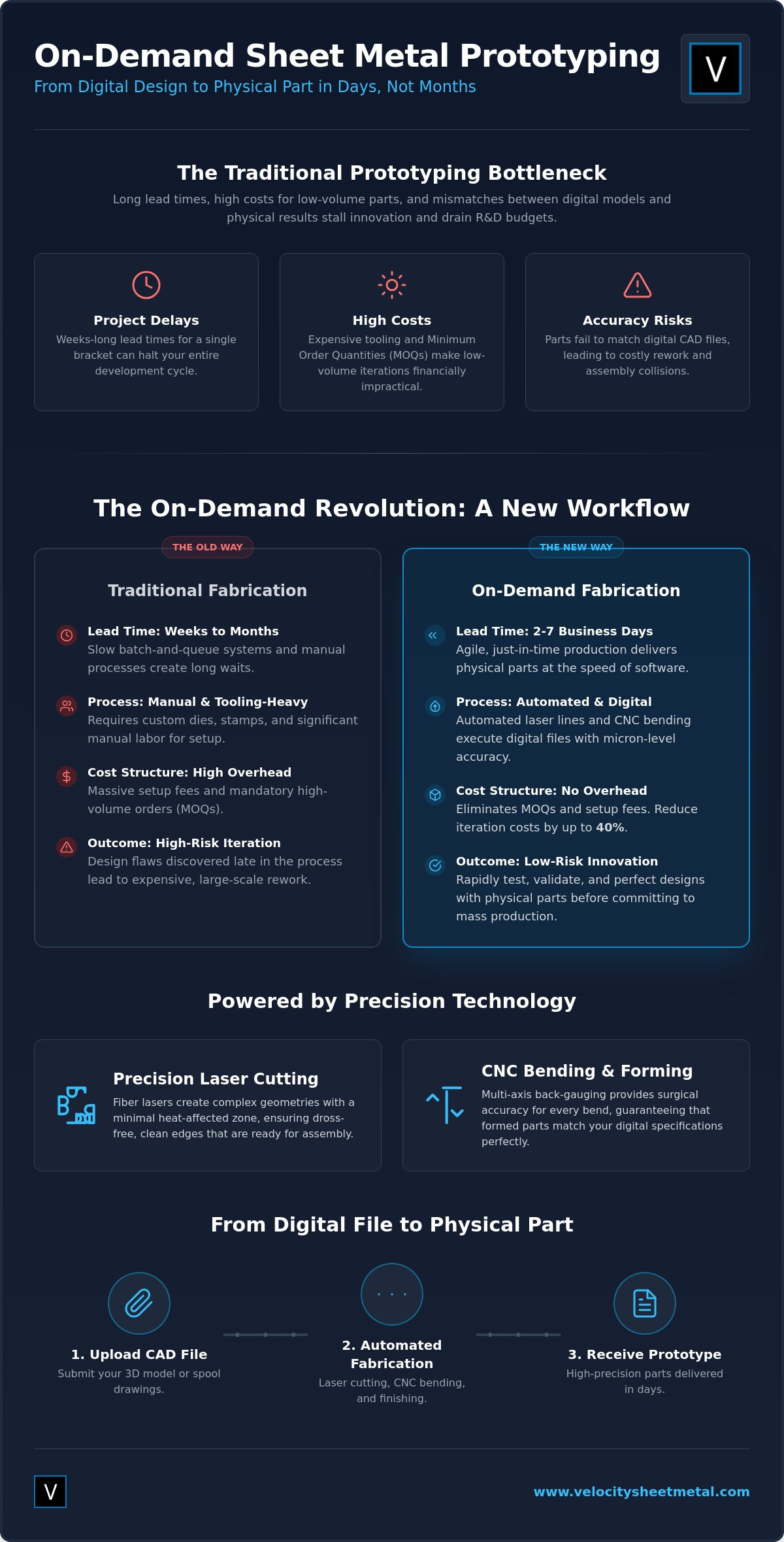
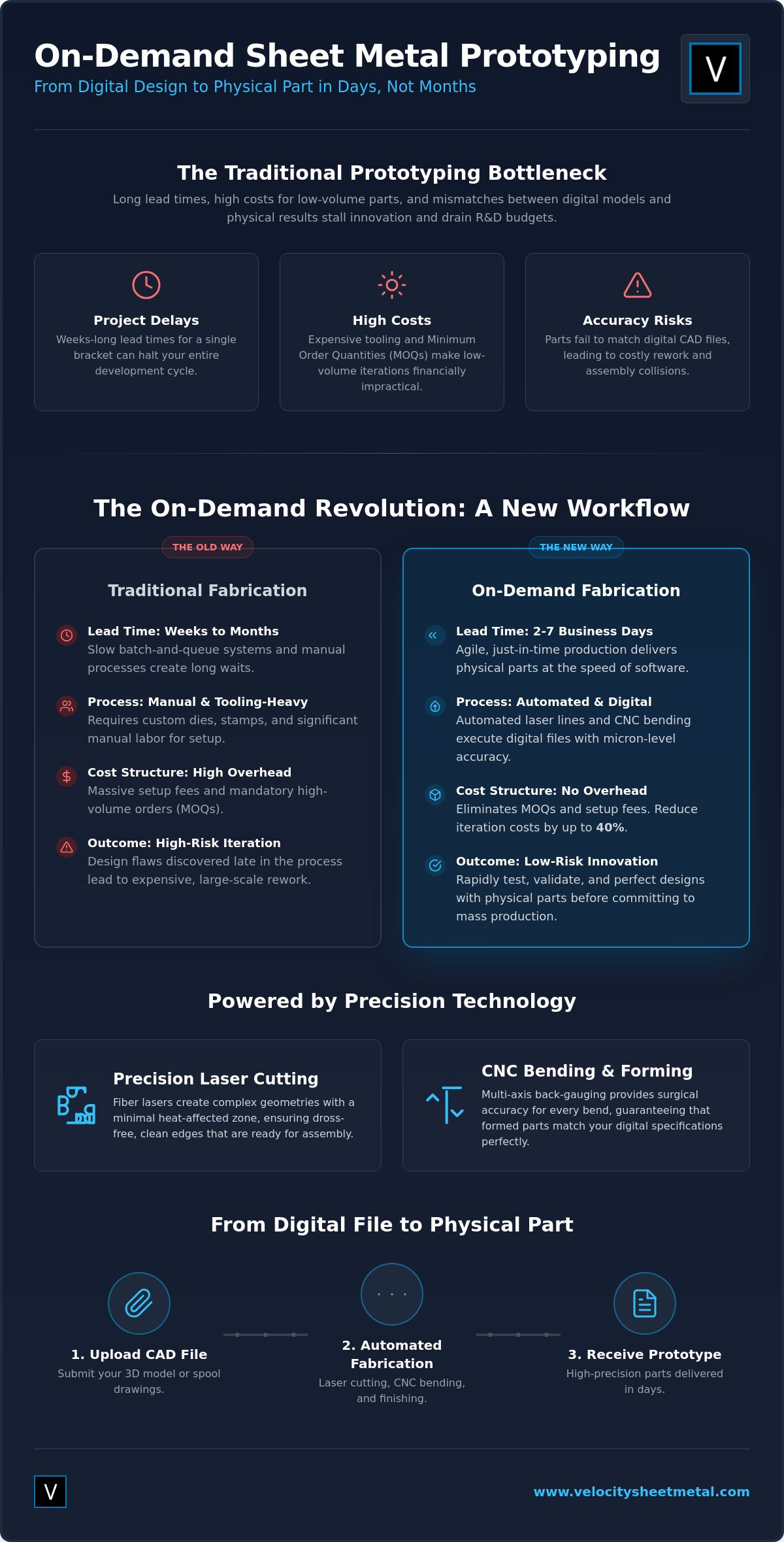
On-demand fabrication is the bridge between a digital model and physical reality. It allows for low-volume production without the massive overhead associated with traditional tooling. In the past, engineers waited weeks for custom dies or stamps. Today, automated systems produce on-demand sheet metal parts for prototypes in a fraction of that time. This shift reduces design cycles from months to days. It gives your team the freedom to iterate rapidly. You can test a design, find a flaw, and have a revised part on the floor in as little as 2 to 7 business days.
Cost efficiency is built into this model. We eliminate the minimum order quantities (MOQs) that usually gatekeep industrial-grade fabrication. This is essential for early-stage testing where you might only need three variations of a mounting bracket. This approach also allows for critical material validation. Digital models can't perfectly simulate how a specific grade of stainless steel or aluminum behaves under physical stress or heat. Using Rapid prototyping techniques ensures your functional testing uses the same alloys as your final production run. It's about moving from theory to tangible results without the financial risk of a full production order.
Reducing Development Risk with Physical Iteration
Digital simulations are powerful, but they have limits. They often fail to capture the nuances of "fit and finish" or the physical ergonomics of a complex assembly. By producing physical iterations, you identify design flaws before they become expensive field collisions. It's much cheaper to fix a mounting hole on a prototype than to rework a thousand parts on a job site. These physical parts are also vital for securing stakeholder approval. Seeing a high-precision part in hand builds investor confidence faster than any digital rendering could.
On-Demand vs. Traditional Fabrication
The primary difference lies in the setup and the technology. Traditional shops rely on "batch and queue" systems and manual punching. This requires significant lead time and high volume to justify the labor cost. On-demand services utilize automated laser lines and CNC bending to move toward "just-in-time" part production. This process supports agile engineering workflows. You get high-end precision without the administrative delays or the setup fees of old-school manufacturing. It's a streamlined path from a digital CAD file to a finished industrial component.
Key Technologies Powering On-Demand Metal Part Production
Modern prototyping relies on a technology stack that eliminates human error and manual setup. We don't just cut metal; we execute digital instructions with micron-level accuracy. The production of on-demand sheet metal parts for prototypes has moved beyond simple shop floor tasks. It's now an integrated ecosystem where fiber lasers, CNC press brakes, and automated material handling work in a single, fluid motion. This technical synergy ensures that the part you hold in your hand matches the digital twin on your screen.
Automated material handling is the silent driver of this speed. Sheets move from storage to the laser bed without manual lifting or administrative delays. This reduces surface marring and accelerates the transition to the bending station. Once the metal is formed, finishing options like powder coating, deburring, and graining provide the final industrial touch. Whether you need a grained finish for a clean-room medical device or heavy-duty powder coating for an outdoor HVAC unit, the process remains methodical and fast. If you're ready to see how these technologies translate to your project, our team can help you navigate custom laser cutting and bending specifications for your next iteration.
Precision Laser Cutting for Complex Geometries
Fiber laser technology is the gold standard for 2026. Unlike older CO2 systems, fiber lasers handle reflective metals like aluminum and copper with ease. They produce a narrower kerf and a smaller heat-affected zone. This results in tighter tolerances and zero dross. Intricate internal cutouts and complex geometries that once required expensive stamping dies are now programmed and cut in minutes. The edge quality is consistent. It's safe for handling and ready for immediate assembly without secondary grinding.
CNC Bending and Forming Capabilities
CNC press brakes provide the structural backbone for formed components. These machines use multi-axis back-gauging to position the sheet with surgical accuracy before every hit. This ensures that every bend angle is identical across your entire prototype batch. This is especially vital for heavy-gauge industrial prototypes where structural integrity is a safety requirement. While traditional shops struggle with the physics of heavy-duty forming, modern CNC systems calculate material springback in real-time. Recent research into die-less freeform sheet metal forming highlights how the industry is pushing toward even greater flexibility by eliminating fixed tooling. For now, CNC bending remains the most reliable way to achieve repeatable, industrial-grade accuracy for complex three-dimensional parts.
Precision Engineering: Integrating BIM Coordination with Prototype Fabrication
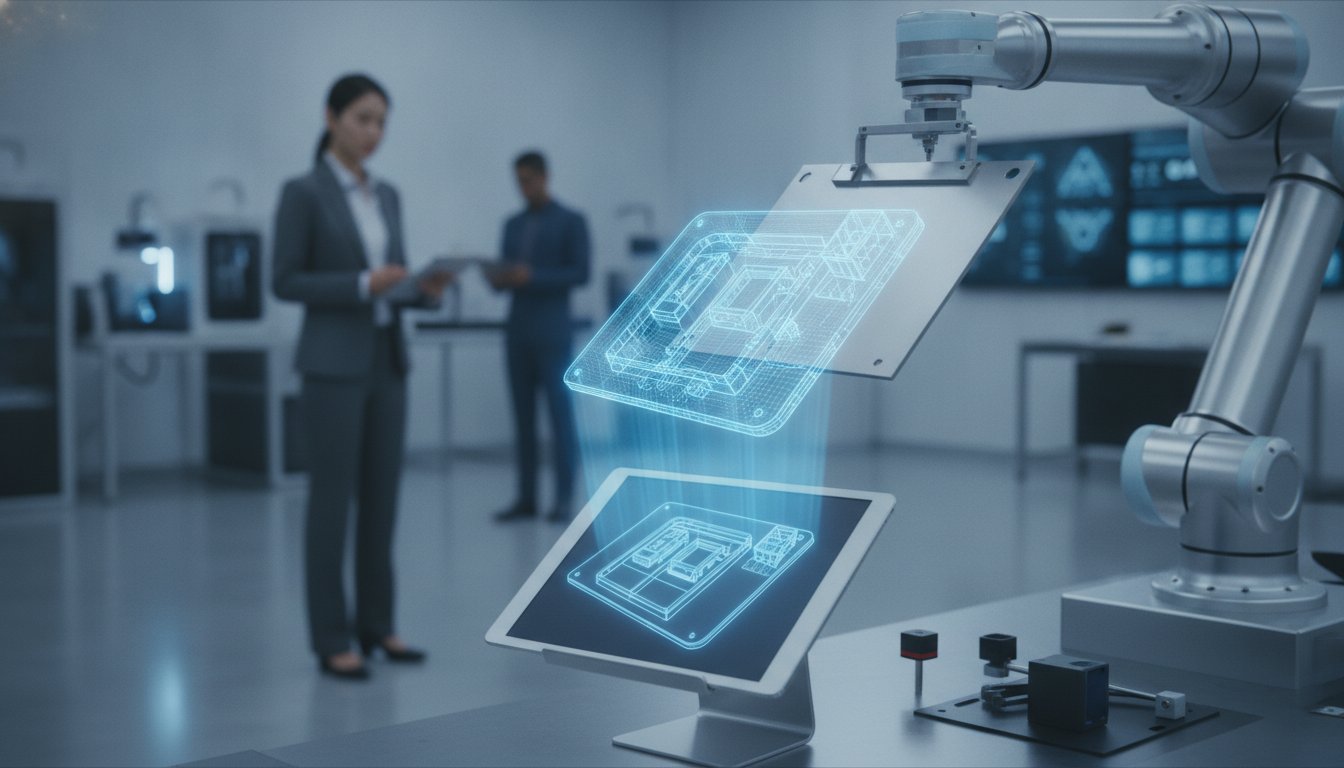
A prototype part is never an island. In industrial applications, a mounting bracket or a custom enclosure is a single component within a massive mechanical ecosystem. Most fabricators treat prototypes as isolated tasks. We treat them as data points in a larger assembly. Integrating BIM coordination into the workflow ensures that on-demand sheet metal parts for prototypes integrate perfectly with existing ductwork, piping, and structural steel. This digital-first approach eliminates the "measure twice, cut once" mantra because the measurement is already locked in the model.
We use spool drawings to bridge the gap between high-level design and the factory floor. These drawings act as the machine-ready instructions that dictate every laser cut and CNC bend. By utilizing these precise digital roadmaps, we can perform physical clash detection in a controlled environment. You can verify complex assembly points and clearance requirements before a single permanent part is manufactured. It's a methodical way to ensure that what works on your screen actually works in the field. This process turns the prototype into a definitive proof of concept for the entire system.
From BIM Model to Physical Part
Mechanical BIM services translate complex 3D data into actionable fabrication instructions. This transition is where most errors occur in traditional shops. By leveraging BIM for sheet metal fabrication, we maintain a continuous digital thread from the engineer's desk to the laser bed. This reduces material scrap and ensures that every prototype matches the final mechanical spool drawings. The widespread adoption of Rapid Prototyping Technologies has made it possible to produce these high-fidelity parts with industrial speed. It's no longer just about making a model; it's about making a functional component that meets exact mechanical tolerances.
Supporting National Accounts with Standardized Quality
Digital coordination provides the foundation for national scalability. When your engineering team is in one state and your project site is in another, you need a partner who can maintain consistency. We provide centralized engineering support for decentralized construction and manufacturing teams. This ensures that every part meets the same rigorous standards regardless of the final destination. Our national shipping capabilities mean you don't have to rely on local shops that might lack the technical capacity for BIM integration. You get standardized quality across every project site, keeping your national accounts on schedule and within budget.
Designing for Success: Best Practices for Rapid Metal Prototyping
Speed in fabrication starts at the designer's workstation. Even the most advanced laser cutters and CNC brakes can't compensate for a file that ignores physical constraints. Design for Manufacturability (DFM) is the difference between a part that fits the first time and a wasted iteration. When you optimize on-demand sheet metal parts for prototypes, you aren't just making the shop's job easier. You're actively reducing your costs. Industry data shows that proper DFM can lower fabrication expenses by 20% to 40% without impacting the functional performance of the part.
Tolerance management is a critical lever for both speed and budget. While our equipment can achieve surgical precision, over-specifying tolerances can lead to unnecessary delays. For example, tightening a tolerance to ±0.005″ can double or triple the cost of specific features compared to standard industrial tolerances. We recommend balancing your precision requirements with production speed. Focus tight tolerances only on critical mating surfaces or mechanical interfaces. For everything else, use standard industry specifications to keep your project moving through the automated production line at maximum velocity.
Material Selection for Industrial Prototypes
Choosing the right alloy involves balancing weight, strength, and environmental resistance. Aluminum is the go-to for lightweight, corrosion-resistant components, while stainless steel offers superior strength and heat resistance for harsh industrial environments. Galvanized steel provides a cost-effective middle ground for structural parts that require basic protection from the elements. You must also consider how material thickness dictates the physical limits of the part. Thicker materials require larger bend radii to prevent cracking, and they naturally result in a wider laser kerf. Always select a material that is representative of your final high-volume production to ensure your prototype testing is valid.
Optimizing CAD Files for On-Demand Fabrication
Clean geometry is the fuel for automated laser nesting and bending. We prefer STEP or DXF exports that are free of "ghost" lines, overlapping segments, or non-manifold geometry. One of the most common mistakes is failing to account for bend allowance and deduction in the flat pattern. If your digital model doesn't reflect the physical stretching of the metal during forming, your final part won't match your assembly requirements. Ensure your CAD software is configured with the correct K-factors for the specific material and thickness you've chosen. If you need assistance refining your design for production, you can upload your CAD files for a technical review by our engineering team.
Velocity Sheet Metal: Scaling Your Prototypes to National Production
Velocity Sheet Metal isn't just a local job shop. We're a national infrastructure partner. Sourcing on-demand sheet metal parts for prototypes is often the first phase of a much larger industrial rollout. We provide the technical bandwidth to support engineers and OEMs across the United States. Our facility is designed to bridge the gap between a single R&D component and high-volume production. Whether you're a decentralized team in three different time zones or a centralized national account, we maintain the same rigorous standards for every shipment.
Scalability is where we separate ourselves from digital-only platforms. Many providers can handle a single laser-cut part, but they falter when you need to move into mass manufacturing. We transition your verified prototype designs directly into our high-capacity workflows, including coil line duct fabrication for large-scale HVAC and industrial projects. With over 50 years of combined industry experience, we've seen every design flaw and solved every material bottleneck. We don't just ship parts; we ship industrial certainty.
A Partner from Concept to Completion
We act as the essential bridge between your digital concept and a tangible industrial product. Our "straight-talk" approach means we don't hide behind administrative delays or vague lead times. If a design won't work on the factory floor, we tell you immediately. We support national accounts by providing standardized production that looks and performs the same whether it's delivered to a site in New York or a facility in California. This consistency is vital for maintaining project timelines and ensuring that field installations go smoothly without unexpected rework.
Getting Started with Your On-Demand Project
Moving from a CAD file to a physical prototype set is a streamlined process. You submit your designs for a technical review, and our automated systems take over the heavy lifting. We analyze your STEP or DXF files to ensure they're ready for our laser and bending lines. For projects requiring complex assembly or deep BIM coordination, our expert team is available to consult on the technical specifics. We're ready to get to work immediately. Your iterations shouldn't wait for a shop's schedule; they should drive your development forward.
Accelerate Your Production Timeline with Precision Fabrication
The transition from a digital model to a physical component is the most critical phase of your development cycle. By leveraging on-demand sheet metal parts for prototypes, you eliminate the traditional bottlenecks of tooling and administrative delays. You've seen how precision laser cutting and CNC bending, when integrated with full BIM and CAD coordination, provide a surgical level of accuracy that digital simulations alone can't match. This approach doesn't just produce a part; it validates your entire mechanical system for national scale production.
Velocity Sheet Metal brings over 50 years of combined manufacturing experience to every project. We understand the urgency of your R&D deadlines and the necessity of industrial grade reliability. From the first iteration to national shipping for all custom part orders, we act as the expert bridge between your design file and a tangible result. Our team is ready to review your specifications and move your project onto the factory floor immediately. We're here to help you turn complex concepts into functional reality.
Request a Quote for Your On-Demand Prototype Parts and start iterating with confidence.
Frequently Asked Questions
What is the typical lead time for on-demand sheet metal prototypes?
Lead times for on-demand sheet metal parts for prototypes typically range from 2 to 7 business days. Some standard components can be ready for shipment in as little as 3 days depending on material availability and design complexity. This rapid turnaround allows your engineering team to move from a digital concept to physical testing without the administrative delays of traditional shops.
Can you handle heavy-gauge sheet metal for industrial prototypes?
Yes, we specialize in forming heavy-gauge materials for structural and industrial applications. Our CNC press brakes and high-power fiber lasers handle thicker sheets that standard prototyping shops often avoid. This capability is essential for creating functional prototypes that must withstand real-world mechanical stresses in harsh industrial environments. We bridge the gap between light-duty models and rugged, field-ready components.
Do you provide design for manufacturability (DFM) feedback on prototype files?
Every project undergoes a technical review where we provide direct DFM feedback. We identify potential issues like improper bend radii, narrow webs, or features placed too close to bend lines. This straight-talk approach prevents production delays and ensures your part is optimized for both laser cutting and CNC bending from the very first iteration. We focus on making your design manufacturable at scale.
What file formats are required for on-demand laser cutting and bending?
We prefer STEP and DXF file formats to ensure the most efficient and accurate workflow. STEP files provide the 3D data needed for precise CNC bending calculations and K-factor adjustments. DXF files are ideal for our automated laser nesting software. Ensuring your geometry is clean and your flat patterns are correctly calculated will accelerate the transition from your digital model to our shop floor.
Do you offer national shipping for prototype parts?
We ship precision on-demand sheet metal parts for prototypes to engineers and OEMs across the United States. Our logistics network ensures that decentralized teams receive identical, high-quality parts regardless of their project location. This national reach allows us to support large-scale organizations that require a single, reliable partner for their prototyping and national production needs. We handle the logistics so you can focus on the engineering.
How does BIM coordination improve the accuracy of sheet metal prototypes?
BIM coordination ensures that your prototype isn't just a standalone part but a perfect fit for a larger mechanical system. We use 3D modeling to perform physical clash detection before any metal is cut. This process identifies interference issues early, moving you from a digital file to a machine-ready component with surgical precision. It eliminates the guesswork and rework often found in traditional fabrication.
Can you scale prototype production into high-volume national manufacturing?
We're built to scale from a single prototype to high-volume national production. Our facility includes automated coil-line capabilities for large-scale ductwork and industrial components. This allows you to verify your design with a small batch and then move seamlessly into mass manufacturing with the same technical partner. We provide a clear path from your initial R&D phase to national-scale industrial rollout.
Which materials are available for rapid on-demand part production?
We stock a wide range of industrial materials including aluminum, stainless steel, and galvanized steel. We also handle specialized alloys for specific environments requiring high corrosion or heat resistance. Choosing the right material during the prototyping phase ensures your functional testing accurately reflects the performance of the final production part. We maintain a robust inventory to ensure your project never stalls due to material shortages.