Sheet Metal Fabrication for Electronics: 2026 Guide
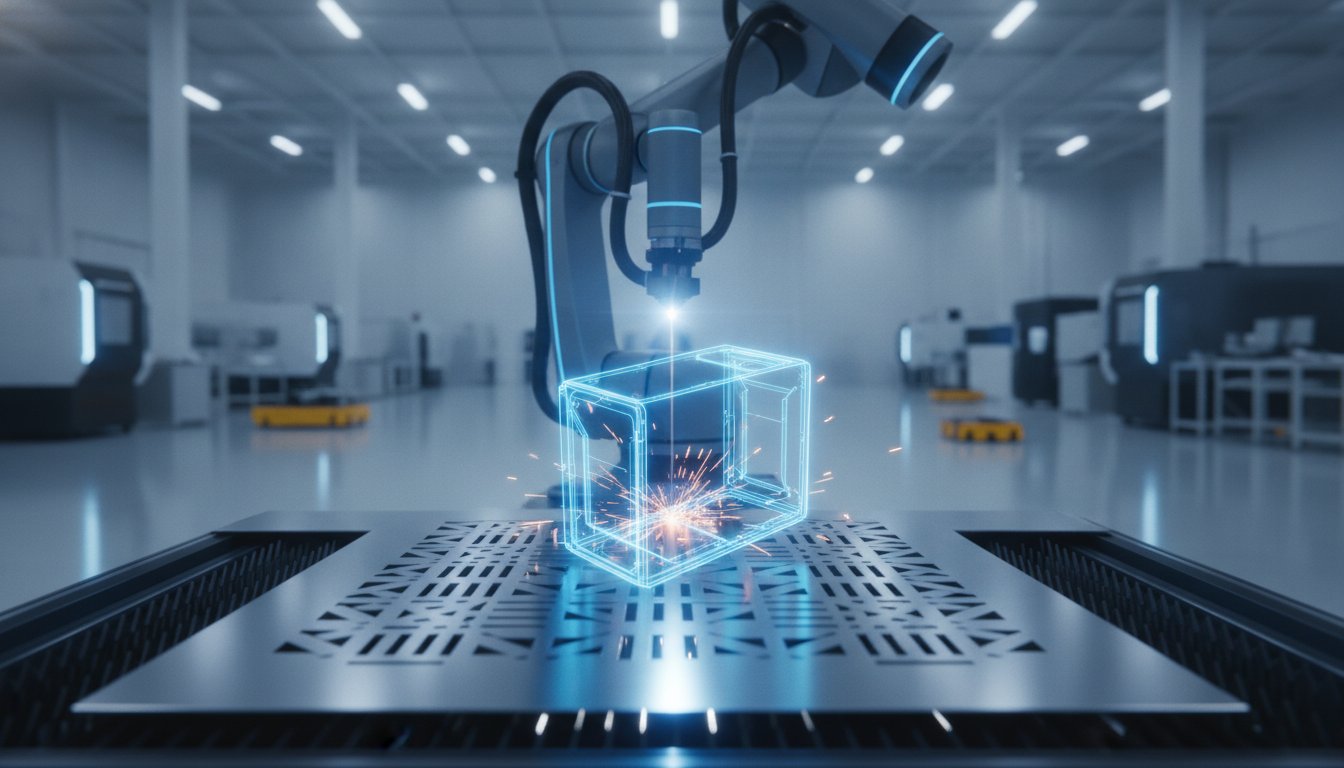
A 0.005 inch deviation isn't just a minor measurement error. In high-frequency electronics, it's the difference between a functional device and a catastrophic EMI leak. You've likely dealt with the frustration of poor thermal dissipation or enclosures that fail regulatory testing due to inconsistent manufacturing. It's a common bottleneck that stalls innovation and inflates lead times.
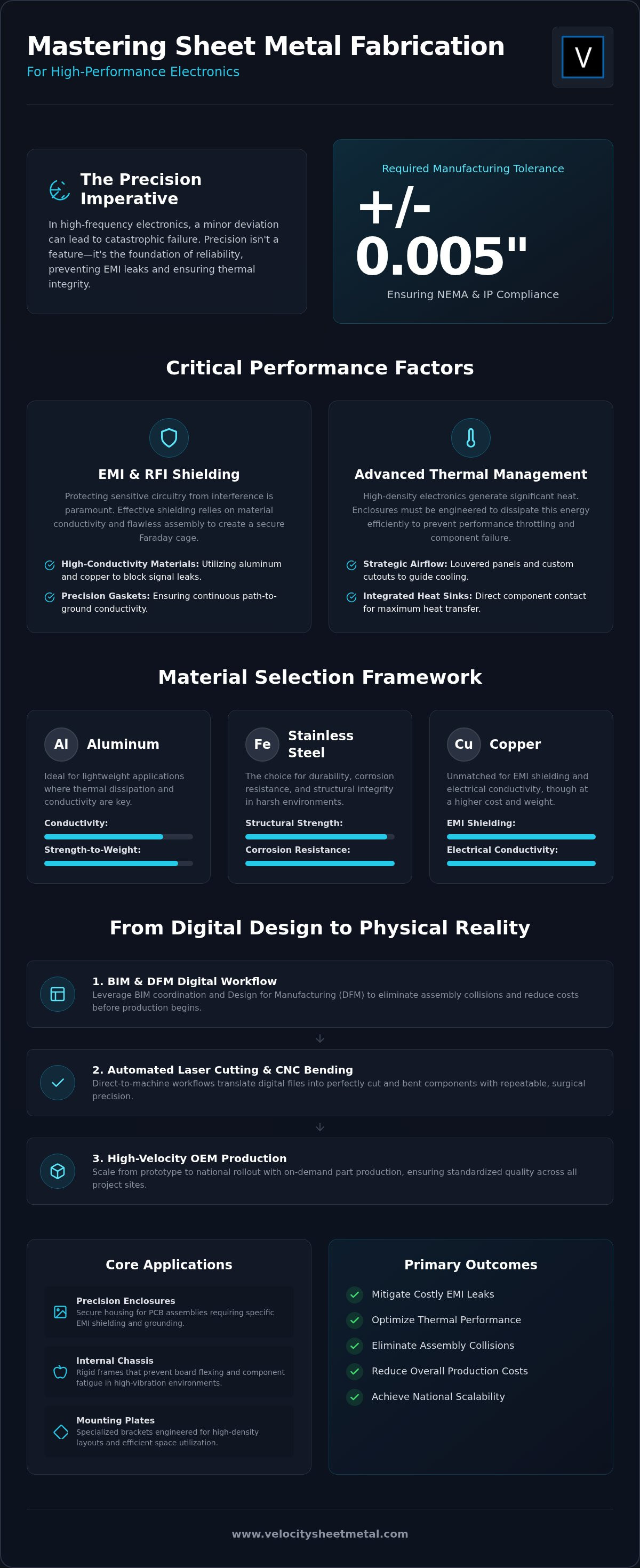
This 2026 guide masters the technical requirements of sheet metal fabrication for electronics, helping you bridge the gap between complex digital designs and physical reality. We'll show you how to maintain precision across every phase of the project. You'll learn the strategies needed to achieve +/- 0.005 inch tolerances and ensure strict NEMA or IP compliance for every unit.
From initial laser cutting and CNC bending to full BIM coordination, we'll break down the workflow required for national scalability. We're moving from the basics of material selection to advanced thermal management and rapid OEM prototyping. By the end of this article, you'll have a clear path to move your electronic infrastructure from a digital file to a high-performance finished product.
Key Takeaways
- Mitigate EMI leaks and optimize thermal management using precision-engineered enclosures, louvered panels, and integrated heat sinks.
- Evaluate the performance trade-offs between aluminum, stainless steel, and copper to meet specific structural and conductivity requirements.
- Master the technical requirements of sheet metal fabrication for electronics to achieve +/- 0.005" tolerances and ensure full NEMA/IP compliance.
- Eliminate assembly collisions and reduce production costs by leveraging BIM coordination and Design for Manufacturing (DFM) workflows.
- Scale from prototype to national rollout with on-demand part production and automated laser cutting services built for high-velocity OEM requirements.
Defining Sheet Metal Fabrication for the Electronics Industry
Modern manufacturing has evolved far beyond basic box-folding. In 2026, sheet metal fabrication for electronics serves as the critical bridge between complex electrical engineering and physical durability. It involves transforming raw sheet metal into high-tolerance components that protect sensitive circuitry from environmental hazards and electromagnetic interference. This lifecycle begins with a precise digital CAD file and ends with a tangible chassis, processed through automated systems like custom laser cutting and CNC press brake bending.
Precision is the primary driver for industrial reliability. IoT devices, high-density server stacks, and high-end consumer electronics require enclosures that do more than just house components. They must facilitate strategic airflow, ground electrical charges, and meet rigorous industry standards. These include NEMA ratings for dust and moisture protection, IP codes for liquid ingress, and ISO compliance for quality management. Without this structural backbone, the most advanced semiconductors would fail under thermal stress or environmental exposure in the field.
Core Applications: Beyond the Simple Box
Customized metal components provide the structural stability that plastic alternatives simply can't match. Engineers rely on these parts to maintain the integrity of their systems under heavy use. Designers specifically utilize sheet metal fabrication for electronics to create:
- Precision Enclosures: Secure housing for PCB assemblies and control systems that require specific EMI shielding and grounding.
- Internal Chassis: Rigid frames that prevent board flexing and component fatigue in high-vibration environments like server racks or industrial machinery.
- Mounting Plates: Specialized brackets engineered for high-density layouts, ensuring every millimeter of internal space is utilized efficiently without compromising access.
The Speed Advantage: On-Demand Production
Speed is the new industry standard for staying competitive. On-demand part production allows OEMs to move from a digital concept to a physical prototype in days rather than weeks. By utilizing direct-to-machine workflows, manufacturers eliminate the administrative friction and manual data entry that typically slows down R&D cycles. This approach offers a massive advantage for national accounts, providing standardized quality across multiple project sites. We use BIM coordination to prevent field collisions in large-scale electronic infrastructure, ensuring that your custom laser cutting and CNC bending requirements are met with surgical precision. This automated workflow turns complex engineering intent into repeatable industrial reality.
Critical Performance Factors: EMI Shielding and Thermal Management
Performance in the electronics sector isn't just about aesthetics. It's about survival. Enclosures must defend against heat and interference while maintaining surgical precision. A +/- 0.005 inch tolerance isn't a goal; it's the baseline for high-velocity production. When components are packed into tight spaces, every fraction of a millimeter counts. Sheet metal fabrication for electronics requires a methodical approach to ensure every cutout, bend, and weld aligns perfectly with the internal hardware. This precision prevents assembly collisions and ensures the device meets its intended lifecycle. From initial laser cutting to final secondary finishes, every step must prioritize technical accuracy over marketing fluff.
Engineering for EMI and RFI Protection
Signal integrity depends on the enclosure's ability to block electromagnetic interference (EMI) and radio frequency interference (RFI). This requires a deep understanding of material conductivity and mechanical assembly. Aluminum and copper provide the high conductivity needed for effective Faraday cages. We eliminate signal leaks through seamless welding and precision-milled gasket interfaces. These interfaces must remain conductive to ensure path-to-ground continuity throughout the entire structure. We often reference standards from the IPC - Association Connecting Electronics Industries to ensure our designs align with the most rigorous global manufacturing expectations. Secondary finishes, like chromate conversion, are applied to enhance shielding without creating an insulating barrier that would trap interference inside.
Advanced Thermal Dissipation Techniques
Thermal management is the second pillar of performance. Excess heat is the leading cause of component failure. We solve this through integrated design rather than bulky add-ons. Precision laser-cut ventilation patterns allow for maximum airflow without compromising the Faraday cage. Louvered panels provide a specialized balance of protection and passive cooling, keeping dust out while letting heat escape. Using CNC press brake bending, we can form cooling fins directly into the chassis. This reduces total part count and simplifies the assembly line. This moves the design from a digital concept to a physical cooling solution without the need for secondary vendors. If your project requires this level of mechanical detail, our precision fabrication team is ready to execute your design immediately.
The manufacturer's dilemma is often weight versus strength. Heavy steel provides maximum protection but complicates logistics and installation. Thin aluminum is light but can warp under the weight of internal transformers or cooling fans. We solve this through structural geometry. By adding ribs and bends in strategic locations, we increase rigidity while keeping the material gauge thin. This approach moves your product from a heavy, over-engineered prototype to a streamlined, high-performance unit ready for national rollout. The goal is always the same: maximum protection with minimum mass. We focus on the industrial reality of your design, ensuring it performs in the field as well as it does on the screen.
Material Selection Framework: Aluminum vs. Stainless Steel vs. Copper
Material selection dictates the entire manufacturing strategy. In the world of sheet metal fabrication for electronics, engineers must prioritize thermal management and weight without sacrificing structural integrity. Aluminum remains the industry favorite, but the decision between different alloys often depends on the complexity of the internal geometry and the intended environment. Selecting the wrong substrate can lead to field failures, from cracked bends to thermal throttling. We move your project from a digital concept to a physical reality by matching the material properties to your specific performance requirements.
While aluminum dominates the market, steel and copper serve critical niche roles. Cold-rolled steel (CRS) is the practical choice for internal mounting plates and brackets where cost-efficiency is a priority and weight is less of a concern. Galvanized steel provides a built-in layer of protection for utility-grade components, offering a cost-effective barrier against oxidation without the need for secondary painting. Copper and brass are reserved for the most demanding electrical applications. These materials are the standard for grounding bars, busbars, and electrical contacts where maximum conductivity is non-negotiable.
Aluminum 5052 vs. 6061 for Electronics
Aluminum 5052 is the workhorse of the electronics industry. It offers a perfect balance of formability and corrosion resistance, making it the primary choice for custom enclosures. When a design moves through our CNC press brake bending stations, 5052 handles tight radii without the risk of stress fractures or cracking. This alloy is also highly compatible with anodizing, providing a clean, professional finish for consumer-facing hardware. Aluminum 6061-T6 is the superior choice for high-vibration environments where structural rigidity prevents component fatigue. While 6061 is stronger, it's less formable; we often reserve it for machined components or simple, high-strength frames that don't require intricate bending.
Corrosion Resistance and Conductive Platings
Harsh environments demand more than just standard materials. For outdoor telecommunications or industrial processing, stainless steel is the definitive answer. It provides inherent resistance to moisture and chemicals without the need for additional coatings. However, stainless steel is heavier and less thermally conductive than aluminum, requiring a careful balance in your thermal management strategy. We utilize precision laser cutting to maintain tight tolerances in these tougher materials, ensuring every component fits perfectly during final assembly.
Surface finishes are where electrical functionality meets environmental protection. Chromate conversion coating, or chem film, is the standard for aluminum sheet metal fabrication for electronics. It provides a conductive surface that resists corrosion, ensuring long-term electrical reliability and path-to-ground continuity. Powder coating is excellent for external durability, but it's an insulator. If your chassis must act as a ground, we specify conductive platings or use precision masking to keep grounding points clear of paint. This methodical approach ensures your national rollout meets all regulatory and functional standards without delay.
Digital-to-Physical Workflow: BIM and DFM for Electronic Components
The gap between a CAD model and a physical chassis is where most project delays happen. In 2026, successful sheet metal fabrication for electronics relies on a seamless digital-to-physical workflow that eliminates manual data entry and administrative friction. We don't just look at drawings; we integrate digital intent directly into our automated production lines. This transition from mechanical spooling to automated laser cutting ensures that the final product matches the engineering file with surgical precision. Real-time collaboration between your mechanical engineers and our fabrication team allows for immediate adjustments before the first piece of metal is ever cut.
Efficiency in manufacturing is driven by how well you prepare the data. By leveraging high-velocity digital tools, we move projects through the technical review phase faster than traditional shops. This methodical approach ensures that every mounting hole, ventilation slot, and bend sequence is optimized for the machinery. It's about creating a predictable, repeatable process that scales from a single prototype to a national rollout without losing accuracy.
BIM Coordination for Large-Scale Electronics Infrastructure
Data centers and server rooms are high-density environments where space is at a premium. We use Building Information Modeling (BIM) to manage the complexity of these installations. The same principles used in BIM clash detection for HVAC fabrication apply directly to large-scale electronic housing. By creating a comprehensive digital twin, we identify potential collisions between enclosures, cable trays, and cooling ducts before they reach the field. Integrating spool drawings into this workflow allows for precise wiring layouts, ensuring that every internal component has the clearance it needs to function and stay cool.
DFM Checklist for Precision Components
Design for Manufacturing (DFM) is the most effective way to reduce production costs and lead times. We analyze your designs to standardize hole sizes, matching them to the specific capabilities of our laser cutting and turret press systems. This reduces tool changes and speeds up the cutting cycle. When it comes to forming, we help you avoid common press brake forming defects by optimizing bend radii and flange lengths. This is critical for tight-tolerance brackets where even a minor deformation can ruin an assembly. By simplifying bend sequences, we reduce the time spent at the machine and minimize material scrap. If you're ready to optimize your next production run, our BIM coordination and fabrication experts can review your files today.
National Scalability: On-Demand Fabrication for Electronics OEMs
Scaling from a single benchtop prototype to a nationwide rollout is where most electronics OEMs face a supply chain breakdown. If you rely on fragmented local shops, you risk inconsistent tolerances and logistical delays that stall market entry. High-velocity sheet metal fabrication for electronics requires a unified approach that prioritizes repeatable accuracy across every production run. We solve this by centralizing production through automated systems that guarantee identical results for every unit, regardless of the order volume. From the initial digital file to the final national delivery, the process is built for speed and industrial reliability.
Repeatability is the backbone of OEM success. Manual processes introduce human error that scales poorly. By leveraging automated coil lines and precision CNC technology, we eliminate the variance that typically plagues large-scale manufacturing. This methodical workflow turns complex electronic housing designs into tangible, high-performance products that meet your exact specifications every time. We've optimized our logistics to support national accounts, moving parts from our floor to your assembly line with surgical precision.
Standardized Production for National Accounts
National accounts require a partner that eliminates geographical variance. Whether your assembly line is on the East Coast or the West Coast, the physical spec must remain identical to prevent assembly collisions. We utilize centralized CNC press brake services for OEMs to maintain supply chain stability. This isn't just about bending metal; it's about algorithmic precision that ensures every flange and mounting point aligns perfectly with your internal hardware. This centralized model reduces lead times and removes the administrative burden of managing multiple regional vendors. We act as your single point of accountability, ensuring consistent quality across every project site.
On-Demand Parts and Rapid Prototyping
The tech market moves fast, and your fabrication partner must move faster. You can't afford to wait weeks for a prototype iteration when the competition is moving in days. Our on-demand workflow supports the iterative design process with fast-turn precision laser cutting services. We bridge the gap between R&D and high-volume production without losing accuracy during the transition. This just-in-time model allows electronics manufacturers to manage inventory more effectively, reducing overhead while maintaining the ability to pivot designs quickly based on field testing. We operate as an authoritative expert who understands that in 2026, a two-day delay is a competitive failure. Our system is designed for immediate execution, turning your engineering intent into a physical product ready for national rollout.
Accelerating Your 2026 Electronics Production
Precision is the non-negotiable standard for modern hardware. We've explored how strategic material selection and advanced EMI shielding prevent field failures. You now understand how BIM coordination and DFM workflows eliminate the administrative friction that typically stalls R&D cycles. Success in 2026 requires moving beyond basic enclosures toward a high-velocity, digital-to-physical manufacturing model. This approach ensures your designs perform exactly as engineered, from the first prototype to a full national rollout.
Reliability depends on a partner who manages the technical complexity of sheet metal fabrication for electronics with industrial pragmatism. We provide the automated high-volume production and spooling expertise needed to maintain supply chain stability. With our national shipping capabilities and standardized quality protocols, you can scale your infrastructure across multiple project sites without losing accuracy. It's time to bridge the gap between your digital files and a tangible, high-performance product.
Ready to streamline your workflow? Get an Instant Quote for Precision Electronics Fabrication and let's get to work immediately.
Frequently Asked Questions
What are the standard tolerances for sheet metal fabrication in electronics?
Standard tolerances for precision electronics typically sit at +/- 0.005 inches. This level of accuracy is mandatory for aligning mounting holes and ensuring PCB standoffs fit without stress. We achieve these tight specs through high-velocity laser cutting and CNC press brake systems. Maintaining these tolerances across a national production run prevents assembly collisions. It ensures that every component fits the internal hardware perfectly, regardless of the order volume or project location.
Which material is best for EMI shielding in electronic enclosures?
Aluminum and copper are the most effective materials for EMI shielding because of their high electrical conductivity. These metals create a reliable Faraday cage that blocks interference. Aluminum is the industry favorite for sheet metal fabrication for electronics because it balances shielding performance with a lightweight profile. While stainless steel offers superior corrosion resistance, it's less conductive. Designers often specify conductive gaskets or specialized platings when using steel to maintain the required signal integrity levels.
How does BIM coordination benefit the fabrication of electronic infrastructure?
BIM coordination uses digital modeling to identify clashes before fabrication begins. In large-scale electronic infrastructure like server rooms, space is extremely tight. We use digital twins to map out the placement of enclosures, cable trays, and ductwork. This process generates accurate spool drawings that guide the production line. It eliminates field collisions and reduces the need for expensive on-site modifications. This methodical approach ensures a seamless transition from the digital concept to the physical installation.
What is the difference between 5052 and 6061 aluminum for custom enclosures?
The choice depends on the complexity of your bends. 5052 aluminum is the preferred alloy for custom enclosures because it's highly formable and doesn't crack under tight press brake radii. 6061-T6 offers higher structural strength but is more brittle during the bending process. We typically use 5052 for the chassis and 6061 for structural frames or mounting plates that require maximum rigidity. Choosing the right alloy ensures your design remains structurally sound throughout its lifecycle.
Can you provide custom powder coating and conductive finishes for electronics?
We provide a full range of finishes tailored for electrical functionality. Powder coating offers a durable, aesthetic exterior but acts as an insulator. For internal components, we use chromate conversion coating, also known as chem film. This finish prevents aluminum oxidation while remaining electrically conductive. It's a critical requirement for maintaining path-to-ground continuity and effective EMI shielding in sheet metal fabrication for electronics. We use precision masking to ensure powder coating doesn't interfere with your specific grounding points.
How do you ensure consistency for high-volume OEM part production?
Consistency is managed through a fully automated, direct-to-machine workflow. We remove manual data entry by feeding your engineering files straight into our laser cutting and CNC bending systems. This process ensures every part meets the exact digital spec. Our automated production lines are built for high-volume repeatability. This allows us to provide standardized quality for national accounts. You receive the same precision on the first unit as you do on the last unit of a thousand-piece run.
What is the typical lead time for on-demand metal part production?
Speed is our primary focus. Typical lead times for on-demand part production are significantly faster than traditional job shops because we eliminate administrative friction. Simple prototypes often ship within a few business days of order approval. High-volume OEM runs are scheduled through our automated lines to ensure supply chain stability. We provide national shipping for all accounts, ensuring that your parts arrive on time whether you're managing a single prototype or a large-scale national rollout.
Do you provide PEM hardware insertion for electronic chassis?
Yes, hardware insertion is a standard part of our fabrication workflow. We install a wide variety of PEM fasteners, including threaded nuts, studs, and standoffs, directly into the sheet metal. This provides high-strength, permanent threads in thin materials where traditional tapping isn't possible. It's an essential service for mounting PCBs, fans, and power supplies. Our automated insertion equipment ensures every fastener is placed with surgical precision, maintaining the structural integrity of your electronic chassis.