BIM Integrated Fabrication Shop: Bridging the Gap Between Digital Design and Physical Production
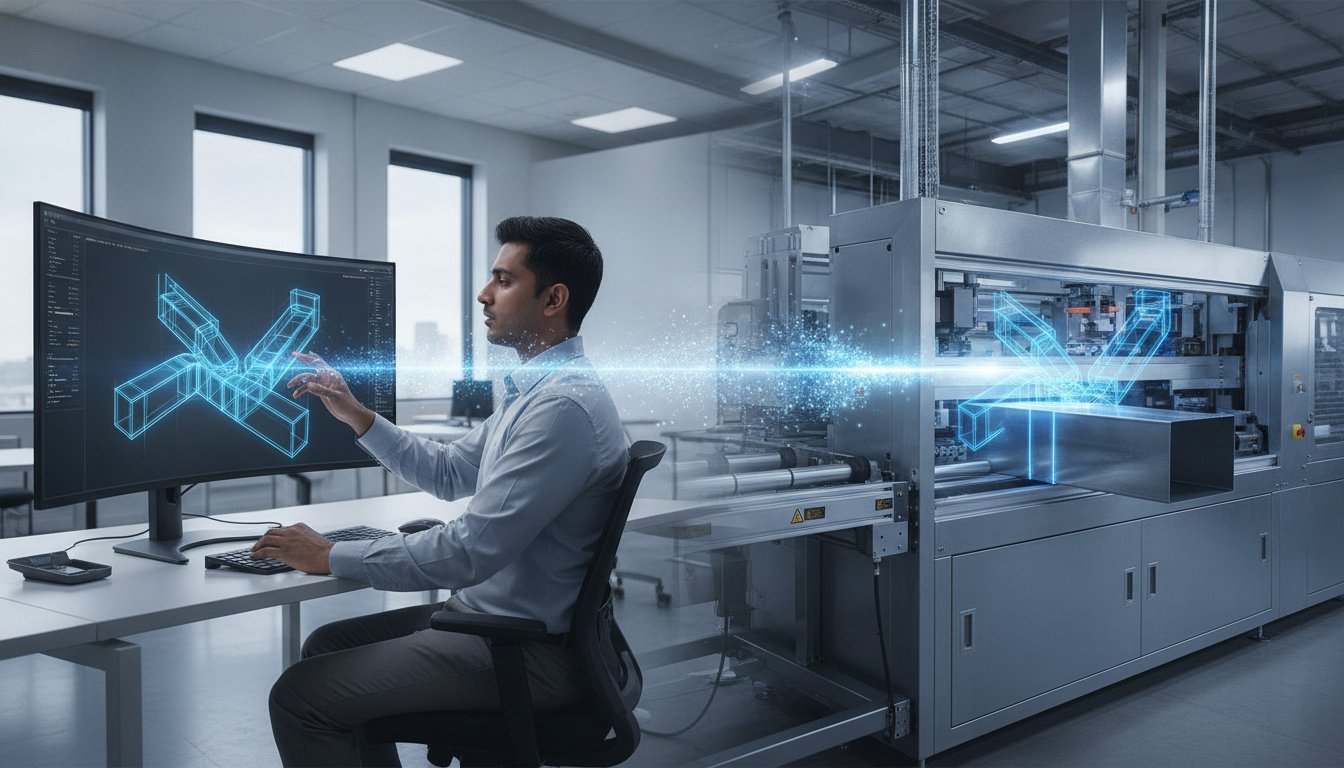
A perfect 3D model is worthless if it turns into a pile of scrap metal on the job site. You've likely seen it happen: a beautifully coordinated Revit file arrives at the shop, but the delivered ductwork doesn't match the design. Field collisions occur, crews sit idle, and rework costs skyrocket. It's a disconnect that modern HVAC construction can't afford. Transitioning your workflow to a BIM integrated fabrication shop bridges this gap, ensuring that what you see on the screen is exactly what arrives on the truck.
We know the frustration of managing inconsistent parts and wasteful material usage. This article shows you how to eliminate those pains through automated precision and standardized quality. You'll learn how seamless data transfer from model to machine accelerates project timelines and secures your bottom line. From the initial digital concept to the final physical result, we'll preview the technology that makes zero-clash field installations a reality for every national account. It is time to stop reacting to field issues and start driving projects forward with confidence.
Key Takeaways
- Learn how a BIM integrated fabrication shop uses digital data to drive manufacturing hardware directly, eliminating the errors common in traditional paper-based shops.
- Trace the seamless workflow that moves duct components from Revit models to automated coil lines for rapid, high-volume production.
- Discover how pre-fabrication coordination identifies hard clashes in the digital model before metal is cut, preventing expensive field rework.
- Identify the critical vetting criteria for choosing a fabrication partner, including software compatibility with Revit and Navisworks.
- Understand how automated precision and national shipping capabilities standardize quality across large-scale commercial accounts.
Defining the BIM Integrated Fabrication Shop in 2026
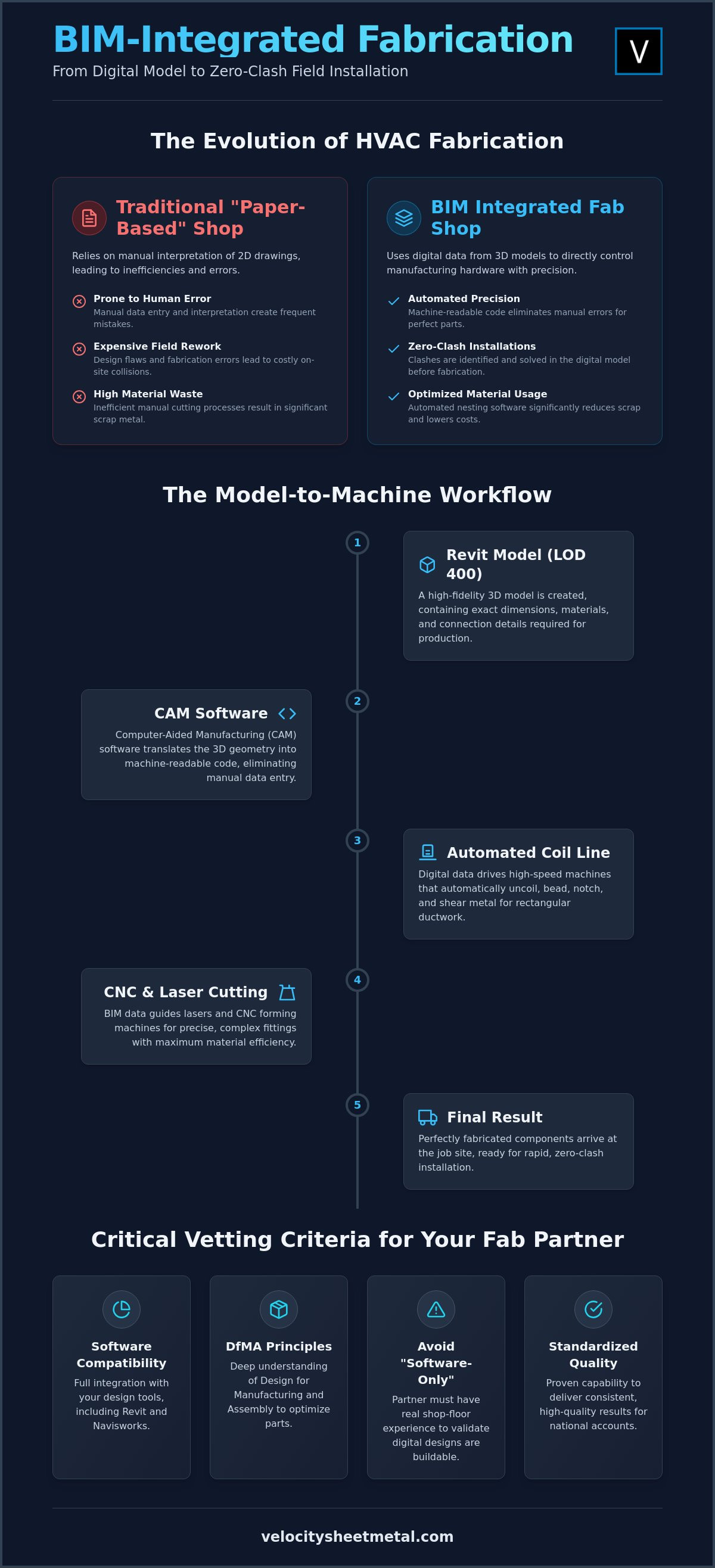
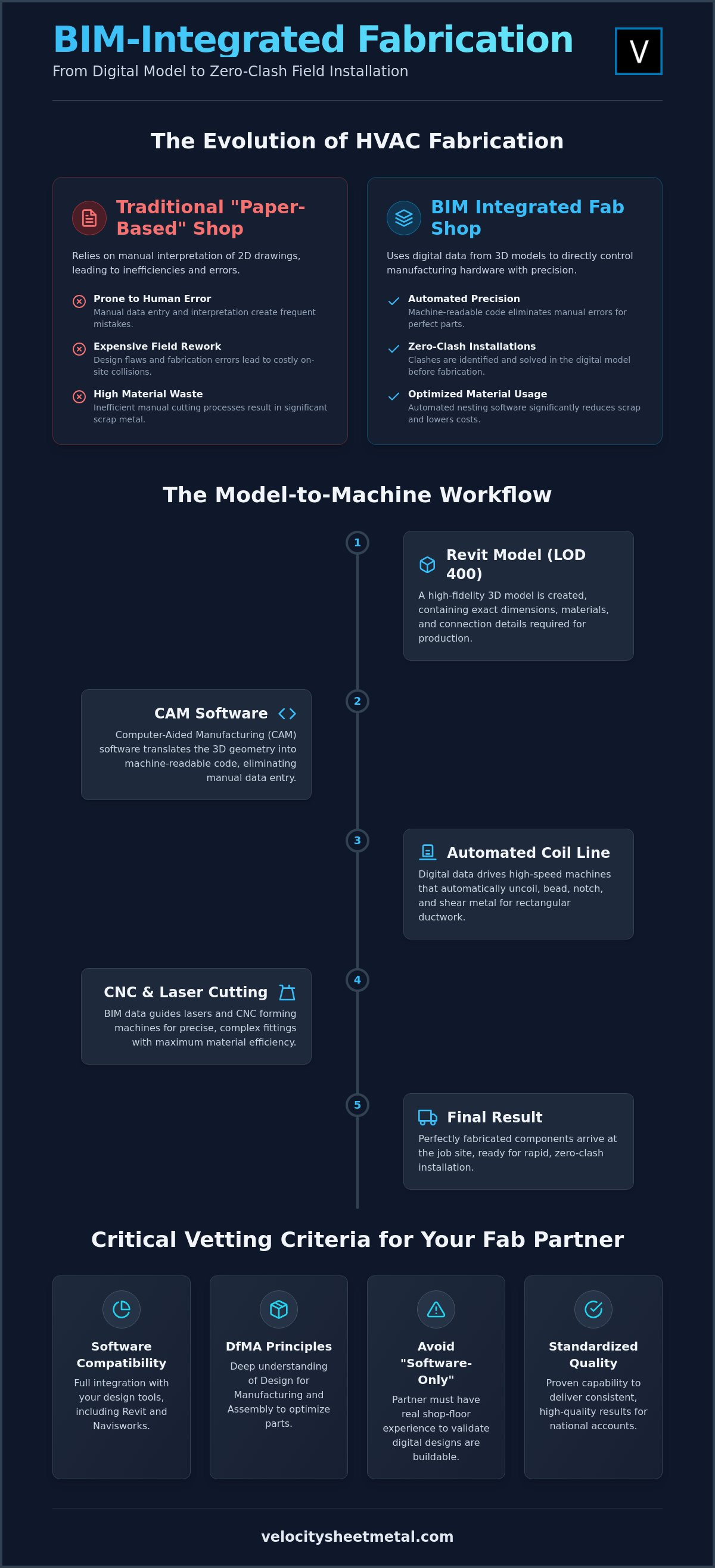
A BIM integrated fabrication shop represents a fundamental shift in how we build. It isn't just about having a Revit license; it's about a facility where digital data directly controls manufacturing hardware. In 2026, the industry has moved past the era of "paper-based" shops where fabricators manually interpreted 2D drawings. Those traditional environments are slow, prone to human error, and disconnected from the design team. Modern shops operate in a data-driven environment. They transform Building Information Modeling (BIM) files into physical components with surgical precision. This transition relies on high-fidelity models, specifically Level of Development (LOD) 400, which contain the exact dimensions, materials, and connection details required for production. Success requires tight coordination between VDC designers, mechanical contractors, and shop operators.
The Evolution from VDC to DfMA
Design for Manufacturing and Assembly (DfMA) has changed the sheet metal industry. We no longer just model for "intent." We model for production. BIM models now inform automated material nesting, which significantly reduces scrap and material waste. Mechanical spooling services prepare this data, breaking down complex systems into manageable "spools" that the shop floor can process immediately. This workflow moves the reader quickly from the initial digital concept to the final physical result. It's about efficiency. It's about speed. By focusing on DfMA, shops can ensure that every part is optimized for the specific capabilities of their CNC machinery and automated coil lines.
Why 'Software-Only' BIM is a Risk for Contractors
Relying on "clash-free" models is a dangerous gamble if those designs aren't buildable. A model might look perfect in Navisworks but fail on the shop floor because of a missing flange clearance or an impossible bend radius. Shop-floor experience is mandatory to validate digital designs before a single piece of metal is cut. You need a partner who understands the physical limits of the press brake and the laser cutter. In 2026, the digital twin of an HVAC system is a precise, high-definition replica that accounts for every bolt, seam, and hanger according to strict industry standards. Without this physical validation, your digital model is just an expensive picture. Contractors who skip this step often face expensive field rework that could have been caught during the spooling phase.
The Model-to-Machine Workflow: From Revit to the Coil Line
The transition from a digital model to a physical part is the most critical phase of any HVAC project. In a BIM integrated fabrication shop, this isn't a manual process of interpretation and measurement. It's a direct data transfer. The workflow begins with a Revit-based model, where every duct segment, fitting, and flange is defined with absolute detail. Once the design is validated, the data moves into Computer-Aided Manufacturing (CAM) software. This software translates the 3D geometry into machine-readable code. By eliminating manual data entry, we remove the primary source of human error. The result is a seamless Digital Fabrication process that ensures the part manufactured is identical to the part designed.
Speed is a direct byproduct of this integration. When the shop floor receives digital spool drawings, the information flows directly to the equipment. There's no delay for transcription or drafting. The components move rapidly from the software to the loading dock, ready for immediate field installation. The data drives the machine. Precision is programmed.
Automated Coil-Line Integration
Rectangular ductwork production relies on the high-speed efficiency of automated coil lines. These machines take the data from digital spool drawings and automatically uncoil, level, bead, notch, and shear the metal. Unlike traditional sheet-fed methods that require manual handling at every step, the coil line processes thousands of pounds of steel per hour with consistent accuracy. This automation ensures that every piece meets strict SMACNA standards for gauge and reinforcement. For contractors, this means faster lead times and a reliable supply of standardized parts for national accounts.
Precision Laser Cutting and CNC Forming
Complex fittings and custom components require a different level of control. Integrated laser cutting systems use BIM data to nest parts with maximum material efficiency, reducing scrap and lowering costs. This precision is vital for creating complex offsets or specialized curb adapters that must fit perfectly on the first try. Once cut, CNC press brakes handle the forming process. These machines use programmed instructions to maintain tight tolerances, even with heavy-gauge materials. This level of repeatability is essential for OEMs who require on-demand production of identical parts. The bridge between the digital file and the tangible product in a BIM integrated fabrication shop is built on this automated precision.
Precision Gains: Reducing Waste and Preventing Field Collisions
Field collisions are the silent killers of construction budgets. When ductwork hits a structural beam or a plumbing line, the project stops. A BIM integrated fabrication shop eliminates these hard clashes before the first sheet of metal is even loaded onto the coil line. By coordinating the model in a virtual environment, we identify and resolve every geometric conflict. This proactive approach transforms the fabrication process into a precision operation. It ensures that the physical components match the digital design with absolute fidelity. Contractors no longer have to worry about the typical inconsistencies that plague traditional shops.
The impact on field labor is immediate and measurable. Crews no longer spend hours sorting through piles of unlabeled ductwork or performing risky field-cutting. The just-in-time delivery model means parts arrive exactly when needed, organized by floor or zone. This reduces site clutter and maximizes the productivity of your skilled tradespeople. When parts fit the first time, installation speed increases. Your project stays on schedule. Your labor costs remain predictable.
Eliminating Rework Through Virtual Coordination
Rework in commercial HVAC projects is expensive. It involves wasted material, lost labor hours, and delayed schedules. Modern BIM-to-fabrication workflows mitigate these risks by validating the design against the actual field conditions. We use detailed spool drawings to provide field crews with clear, sequential installation maps. This ensures that every piece fits exactly where it belongs. In this context, clash detection serves as a financial insurance policy for contractors, ensuring that the digital design translates into a zero-collision physical installation. It is about removing the guesswork from the job site.
Material Efficiency and Sustainability
Sustainability and profitability go hand-in-hand in a BIM integrated fabrication shop. Automated nesting software analyzes the 3D model data to optimize the layout of parts on a sheet of metal. This reduces scrap and minimizes material waste. It is a precise way to manage resources that benefits both the environment and the project budget. For national accounts, this standardized production ensures zero-waste workflows across every project site. We move the reader from the high-level design to a tangible, efficient product without the typical administrative delays or material overages of the past. Precision in the shop leads to profit in the field.
Evaluating Your Fabrication Partner: Vetting Criteria for 2026
Selecting a BIM integrated fabrication shop is a high-stakes decision that dictates your project's field performance. It's no longer enough to choose a shop based on proximity or price alone. In 2026, the technical gap between a traditional workshop and a data-driven partner has widened significantly. You need a partner who speaks the language of VDC and possesses the industrial hardware to back it up. A failure to vet your partner's digital maturity leads directly to the field collisions and rework we have already identified as project killers. Use this essential checklist to evaluate your next fabrication partner:
- Software Integration: Does the shop's system integrate directly with Revit and Navisworks without manual file conversion?
- Hardware Automation: Do they utilize automated coil lines for rectangular duct and precision laser cutting for custom fittings?
- Technical Depth: Can their team produce and manage LOD 400 models and detailed spool drawings internally?
- Logistical Reach: Do they have the proven infrastructure for national shipping and high-volume distribution?
Technical and Software Proficiency
A true partner must handle LOD 400 models with ease. This level of detail is required for mechanical spooling, ensuring that every flange, seam, and hanger is accounted for before production starts. Ask about the team behind the screen. You want a shop with deep institutional knowledge, such as 50+ years of combined industry experience, to validate digital designs against physical reality. This expertise allows them to act as a firm guide, catching design flaws that software alone might miss. Data security is equally vital. Confirm that they have established protocols to protect your proprietary project models. This technical foundation prevents the "clash-free but unbuildable" scenarios that stall projects and inflate budgets.
Logistics and National Scalability
National shipping capabilities are a non-negotiable requirement for contractors managing multi-site accounts. Standardized quality across different project locations ensures that field crews in different states receive the exact same precision-engineered parts. This consistency reduces training time and streamlines installation. Evaluating a shop's ability to handle high-volume orders is critical for avoiding bottlenecks during peak construction phases. If you're ready to secure a partner that bridges the gap between design and delivery with surgical precision, contact Velocity Sheet Metal to discuss your project specifications. Standardized production isn't just about quality. It's about predictable results at scale. We move your project from a digital file to a tangible product with a speed that local, non-integrated shops simply cannot match.
Velocity Sheet Metal: National Scale BIM-to-Build Solutions
Velocity Sheet Metal acts as the essential bridge between your digital design and a tangible, high-performance product. As a premier BIM integrated fabrication shop, we understand that precision is the only metric that matters on a commercial job site. We don't just manufacture ductwork; we solve complex industrial problems with speed and accuracy. Our team brings over 50 years of combined industry experience to every project, ensuring that your digital files are validated by shop-floor reality before production begins. We operate with a high degree of professional confidence and industrial pragmatism. We value your time. We value your precision.
Our facility is engineered for high-volume output and surgical accuracy. Contractors, engineers, and OEMs leverage our technical capabilities to stay ahead of aggressive project timelines. We provide a comprehensive suite of services designed for seamless integration:
- Automated coil-line production for rapid, high-volume rectangular duct.
- Custom laser cutting for complex fittings and specialized OEM parts.
- CNC press brake bending to maintain tight tolerances on heavy-gauge components.
- BIM coordination and spooling to ensure zero-clash field installations.
Standardizing Quality for National Accounts
Consistency is the foundation of our national account services. Velocity ensures identical quality from project to project, regardless of where your job site is located. We act as a single-source partner for complex HVAC and metal fabrication needs, eliminating the variability of local shops. From the initial technical review to the final logistics of national delivery, our process is controlled and repeatable. This standardization allows your field crews to work with a predictable product every time. For a deeper look at our manufacturing speed, explore our automated coil line capabilities to see how we handle large-scale rectangular duct requirements.
Get a Precision Quote Today
We invite you to experience the "Authoritative Expert Operator" approach. We cut through the typical delays of the industry and move your project immediately into production. Submit your BIM models or spool drawings for a comprehensive technical review. Our team will validate your data and provide a quote that reflects our commitment to precision and speed. We are ready to get to work. Start your project by choosing the link below to Request a Quote for BIM-Integrated Fabrication. Let us bridge the gap between your digital concept and a physical result that fits the first time.
Build with Precision and Speed
The disconnect between digital design and physical production is a legacy problem with a modern, data-driven solution. Partnering with a BIM integrated fabrication shop ensures your Revit models aren't just theoretical designs. They become accurate, tangible products delivered to your job site with zero collisions. You've seen how automated workflows and virtual coordination eliminate rework and stabilize labor costs. It's about moving from the screen to the shipping dock without the typical administrative delays or manual errors that stall commercial projects.
Velocity Sheet Metal brings 50+ years of combined industry experience to every order. We utilize an automated coil-line for high-volume production and provide national shipping to maintain standardized quality across your entire portfolio. You shouldn't have to choose between speed and accuracy. Our team acts as the essential bridge that secures your project's timeline and bottom line. It's time to stop reacting to field issues and start driving your production forward with surgical precision. Streamline your next project with Velocity Sheet Metal and experience the difference of a truly integrated partner. Your next successful installation starts here.
Frequently Asked Questions
What is a BIM-integrated fabrication shop?
A BIM integrated fabrication shop is a manufacturing facility where digital Building Information Modeling data directly drives production hardware. It acts as the technical bridge between design software and CNC machinery. Instead of manually interpreting 2D drawings, the shop uses 3D model data to control automated coil lines and laser cutters. This integration ensures that the physical ductwork is an exact replica of the digital design.
How does BIM coordination reduce HVAC project costs?
BIM coordination reduces costs by identifying "hard clashes" in a virtual environment before any metal is cut. This prevents the high expense of field rework and idle crew time waiting for corrected parts. By resolving conflicts between HVAC, structural, and plumbing systems digitally, you avoid the waste of scrapped materials. It's a financial insurance policy that keeps your project on budget and on schedule.
Can you fabricate ductwork directly from my Revit models?
Yes, we can fabricate ductwork directly from your Revit models by translating the digital data into machine-readable code. This seamless transfer eliminates the risk of human error associated with manual data entry. We use these digital files to drive our automated coil lines and precision laser cutters. It ensures that every component arrives on-site with perfect dimensional accuracy and matches your spool drawings exactly.
What are the lead times for automated coil-line duct production?
Lead times for automated coil-line production are significantly shorter than traditional manual sheet-fed methods. Our automated systems process thousands of pounds of steel per hour, which allows us to meet aggressive construction schedules. While specific timelines depend on project volume and complexity, our data-driven workflow prioritizes speed and delivery. We focus on getting your parts to the site exactly when your field crews are ready for installation.
Do you provide shipping for national accounts across the US?
We provide nationwide shipping to support national accounts and large-scale commercial projects across the United States. This capability allows contractors to maintain standardized quality and precision regardless of the project's location. By using a single-source partner, you ensure that every site receives the same high-fidelity ductwork and custom fittings. It simplifies your logistics and streamlines the entire supply chain for multi-site accounts.
What level of detail (LOD) is required for fabrication-ready BIM models?
Fabrication-ready models typically require Level of Development (LOD) 400. This level of detail includes the specific dimensions, materials, and connection requirements necessary for direct manufacturing on the shop floor. While LOD 300 or 350 is often sufficient for general design coordination, a BIM integrated fabrication shop requires LOD 400 to drive CNC machinery with surgical precision. It provides the "digital twin" accuracy needed for zero-clash field installations.
How do BIM-integrated shops handle custom HVAC fittings and curb adapters?
BIM-integrated shops use precision laser cutting and CNC press brake bending to produce custom HVAC fittings and curb adapters. The digital model provides the exact geometry needed for the laser to nest parts with minimal material waste. Once cut, the CNC press brake bends the metal to programmed tolerances. This process ensures that even the most complex custom parts fit perfectly on the first try, eliminating the need for field adjustments.
What is the difference between VDC and BIM in the context of fabrication?
BIM refers to the 3D model and the data it contains, while VDC (Virtual Design and Construction) is the broader management process. In a fabrication context, BIM is the tool we use to define the physical parts. VDC is the methodology we use to coordinate those parts with other trades to ensure a clash-free build. Both are essential for a modern, data-driven shop floor to operate at peak efficiency and deliver a tangible product that matches the digital intent.